On Sunday, May 5th, I received an email from a person claiming to have access to a massive leak of API documentation from inside Google’s Search division.

A macOS version of the LightSpy surveillance framework has been discovered, confirming the extensive reach of a tool only previously known for targeting Android and iOS devices.

Chinese nationals Yunhe Wang, Jingping Liu, and Yanni Zheng have been sanctioned by the U.S. Treasury Department for operating the residential proxy service 911 S5, which was a botnet comprised of over 19 million residential IP addresses that had been used to support various cybercrime groups' COVID-19 relief scams and bomb threats, Ars Technica reports.
A court-authorized international law enforcement operation led by the U.S. Justice Department disrupted a botnet used to commit cyber attacks, large-scale fraud, child exploitation, harassment, bomb threats, and export violations.

A new vulnerability has been discovered in macOS Sonoma that is associated with privilege escalation. This vulnerability has been assigned

Today we loaded 16.5M email addresses and 13.5M unique passwords provided by law enforcement agencies into Have I Been Pwned (HIBP) following botnet takedowns in a campaign they've coined Operation Endgame. That link provides an excellent overview so start there then come back to this blog post which

Between 27 and 29 May 2024 Operation Endgame, coordinated from Europol’s headquarters, targeted droppers including, IcedID, SystemBC, Pikabot, Smokeloader, Bumblebee and Trickbot. The actions focused on disrupting criminal services through arresting High Value Targets, taking down the criminal infrastructures and freezing illegal proceeds. This approach had a global impact on the dropper ecosystem. The malware, whose infrastructure was taken down...
Continuing a string of successful botnet takedowns, on Thursday, May 30th 2024, a coalition of international law enforcement agencies announced "Operation Endgame". This effort targeted multiple botnets such as IcedID, Smokeloader, SystemBC, Pikabot and Bumblebee, as well as some of the operators of these botnets. These botnets played a key part in enabling ransomware, thereby causing damages to society estimated to be over a hundred million euros. This coordinated effort is the largest operation ever against botnets involved with ransomware.

Cybercriminals are abusing Stack Overflow in an interesting approach to spreading malware—answering users' questions by promoting a malicious PyPi package that installs Windows information-stealing malware.

Thanks to a flaw in a decade-old version of the RoboForm password manager and a bit of luck, researchers were able to unearth the password to a crypto wallet containing a fortune.

Our customers’ safety is our utmost priority. In order to protect our customers from any potential security threats, we’ve rolled out major bug-fix releases for several older versions of TeamCity (versions 2022.04 through 2023.11).

A couple months ago, my colleague Winston Ho and I chained a series of unfortunate bugs into a zero-interaction local privilege escalation in Zscaler Client Connector. This was an interesting journey into Windows RPC caller validation and bypassing several checks, including Authenticode verification. Check out the original Medium blogpost for Winston’s own ZSATrayManager Arbitrary File Deletion (CVE-2023-41969)!
Cooler Master, a popular computer hardware maker, has allegedly suffered from a data breach, exposing the company’s corporate data as well as the personal details of members from its fan-based members program.
The attackers claim to have stolen 103GB of data from the company’s servers on May 18th. According to the attacks’ perpetrators, the allegedly stolen information carries a trove of sensitive data, including Cooler Master’s Fanzone members’ payment card details.

Explore the rise of Black Basta as a top ransomware threat, their sophisticated tactics, notable attacks, and future implications for cybersecurity.
The online criminal bazaar BreachForums has been resurrected merely two weeks after a U.S.-led coordinated law enforcement action dismantled and seized control of its infrastructure.
Cybersecurity researchers and dark web trackers Brett Callow, Dark Web Informer, and FalconFeeds revealed the site's online return at breachforums[.]st – one of the dismantled sites – by a user named ShinyHunters, who has since offered for sale a 1.3 TB database containing details of allegedly 560 million Ticketmaster customers for $500,000.
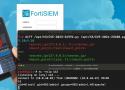
CVE-2024-23108 Fortinet FortiSIEM Command Injection Deep-Dive and Indicators of Compromise. This blog details a command injection vulnerability which allows an unauthenticated attacker to access the FortiSIEM server as root to execute arbitrary commands.

A leaked list of phone numbers reveals how Rwandan President Paul Kagame’s regime used Pegasus spyware sought to track political opponents and members of his own party.
PCTattletale is a simple stalkerware app. Rather than the sophisticated monitoring of many similarly insecure competitors it simply asks for permission to record the targeted device (Android and Windows are supported) on infection. Afterward the observer can log in to an online portal and activate recording, at which point a screen capture is taken on the device and played on the target's browser.
Over the past few months, we have observed increased interest of malicious groups in leveraging remote-access VPN environments as an entry point and
The hacking group RansomHub is threatening to release “sensitive personal information” about the auction house’s clients.


