
The vulnerability — now fixed — was discovered in a cloud-based system that allows customers to remotely manage their security alarm systems.
La guerre s’est invitée dans le cyberespace suisse avec fracas cette semaine, le groupe de hackers NoName visant des dizaines de cibles. Il faudra mieux se préparer face à des attaques qui pourraient s’intensifier, avertissent trois experts

The US government warns encryption chipmaker Hualan has suspicious ties to China’s military. Yet US agencies still use one of its subsidiary’s chips, raising fears of a backdoor.
Top U.S. cybersecurity officials confirmed Thursday that several federal agencies have been impacted by cyberattacks on the widely used MOVEit file transfer tool.
Cybersecurity and Infrastructure Security Agency (CISA) Director Jen Easterly told reporters that her team and the FBI are working to provide assistance to federal agencies that used MOVEit, which is being exploited by the Russia-based Clop ransomware gang in a widespread breach that appears to have compromised dozens of entities.
“We’ve been working closely with Progress Software [which makes MOVEit], the FBI and our federal partners to understand its prevalence within federal agencies,” she said. Earlier in the day, CNN first reported that several government agencies were compromised in the hacks. Easterly said that CISA is providing support to “several agencies that have experienced intrusions of their MOVEit applications.”

Mandiant is investigating a Barracuda ESG appliance zero-day vulnerability being exploited in the wild.

Russian national Ruslan Magomedovich Astamirov was arrested in Arizona and charged by the U.S. Justice Department for allegedly deploying LockBit ransomware on the networks of victims in the United States and abroad.

VulnCheck discovers a network of fake security researcher accounts promoting hidden malware.

Déferlante d’attaques DDoS en Suisse revendiquées par des hacktivistes pro-russes

The hackers responsible for exploiting a flaw to target users of a popular file transfer tool has begun listing victims of the mass-attacks

Over the past few days, we have seen phishing attacks that use a combination of compromised Microsoft 365 accounts and .rpmsg encrypted emails to deliver the phishing message.

Le groupe d'hacktivistes pro-russe «NoName057(16)» poursuit sans relâche ses attaques contre des serveurs suisses. Voici leur organisation sur Telegram.

Microsoft attributes several campaigns to a distinct Russian state-sponsored threat actor tracked as Cadet Blizzard (DEV-0586), including the WhisperGate destructive attack, Ukrainian website defacements, and the hack-and-leak front “Free Civilian”.
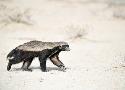
The commercial attack tool’s use by bad actors has faded after an initial flurry, while Cobalt Strike remains the go-to post-exploitation tool for many.
Berne, 14.06.2023 - Depuis la révélation de l'attaque par rançongiciel qui a visé l'entreprise Xplain, des examens approfondis sont en cours à l'administration fédérale. Les analyses effectuées jusqu'à présent montrent que les données dérobées comprennent aussi des données opérationnelles de diverses autorités et organisations. Le but est maintenant de comprendre comment ces données se sont retrouvées sur l'infrastructure de l'entreprise Xplain.

La société TAG Aviation a été victime d'une attaque par ransomware. Les recherches de watson révèlent que Black Basta est à l'origine de cette attaque.

The Swiss government is under DDoS attacks, but several ransomware gangs have also turned their sights on other Swiss organizations.

Today is Microsoft's June 2023 Patch Tuesday, with security updates for 78 flaws, including 38 remote code execution vulnerabilities.

Affected Platforms: FortiOS
Impacted Users: Targeted at government, manufacturing, and critical infrastructure
Impact: Data loss and OS and file corruption
Severity Level: Critical
Today, Fortinet published a CVSS Critical PSIRT Advisory (FG-IR-23-097 / CVE-2023-27997) along with several other SSL-VPN related fixes. This blog adds context to that advisory, providing our customers with additional details to help them make informed, risk-based decisions, and provides our perspective relative to recent events involving malicious actor activity.

When Lexfo Security teased a critical pre-authentication RCE bug in FortiGate devices on Saturday 10th, many people speculated on the practical impact of the bug. Would this be a true, sky-is-falling level vulnerability like the recent CVE-2022-42475? Or was it some edge-case hole, requiring some unusual and exotic requisite before any exposure? Others even went further, questioning the legitimacy of the bug itself. Details were scarce and guesswork was rife.

On May 31, 2023, Progress Software disclosed a critical SQL injection vulnerability that was later assigned CVE-2023-34362. Rapid7 has observed exploitation in…


