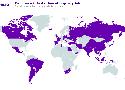
Raspberry Robin appears to be a type of Pay-Per-Install botnet, likely to be used by cybercriminals to distribute other malware.

We see that one of our vulnerabilities is exploited in the wild Link. So we decided to public the detail analysis of our two bug chains. Any customer has enough information to mitigate these bugs. The vendor also released all patches a week ago. This blog post shares the detail

This is a statement on the NZZ news article from January 9, 2023 about alleged weaknesses in Threema's encryption. But these are completely impractical and theoretical.
Threema is a Swiss encrypted messaging application. It has more than 10 million users and more than 7000 on-premise customers. Prominent users of Threema include the Swiss Government and the Swiss Army, as well as the current Chancellor of Germany, Olaf Scholz. Threema has been widely advertised as a secure alternative to other messengers.
In our work, we present seven attacks against the cryptographic protocols used by Threema, in three distinct threat models. All the attacks are accompanied by proof-of-concept implementations that demonstrate their feasibility in practice.
On 29 December 2022, the CNIL's restricted committee imposed an administrative fine of 8 million euros on the company APPLE DISTRIBUTION INTERNATIONAL because it did not collect the consent of iPhone's French users (iOS 14.6 version) before depositing and/or writing identifiers used for advertising purposes on their terminals.
After inadvertently finding that InfoSys leaked an AWS key on PyPi I wanted to know how many other live AWS keys may be present on Python package index. After scanning every release published to PyPi I found 57 valid access keys from organisations like:
Amazon themselves 😅
Intel
Stanford, Portland and Louisiana University
The Australian Government
General Atomics fusion department
Terradata
Delta Lake
And Top Glove, the worlds largest glove manufacturer 🧤
At the end of November 2022, OpenAI released ChatGPT, the new interface for its Large Language Model (LLM), which instantly created a flurry of interest in AI and its possible uses. However, ChatGPT has also added some spice to the modern cyber threat landscape as it quickly became apparent that code generation can help less-skilled threat actors effortlessly launch cyberattacks.
In Check Point Research’s (CPR) previous blog, we described how ChatGPT successfully conducted a full infection flow, from creating a convincing spear-phishing email to running a reverse shell, capable of accepting commands in English. The question at hand is whether this is just a hypothetical threat or if there are already threat actors using OpenAI technologies for malicious purposes.
CPR’s analysis of several major underground hacking communities shows that there are already first instances of cybercriminals using OpenAI to develop malicious tools. As we suspected, some of the cases clearly showed that many cybercriminals using OpenAI have no development skills at all. Although the tools that we present in this report are pretty basic, it’s only a matter of time until more sophisticated threat actors enhance the way they use AI-based tools for bad.

Users of underground forums start sharing malware coded by OpenAI’s viral sensation and dating scammers are planning on creating convincing fake girls with the tool. Cyber prognosticators predict more malicious use of ChatGPT is to come.

Confidential details including child passport scans and SEN data is published online, the BBC finds.

No passwords, but plenty of stuff for social engineering and doxxing

Because we take security, privacy, and transparency very seriously, we are sharing the details of a recent incident.

The news organization won't go into detail about what attackers hit, and why.
The decision is one of the most consequential issued under the E.U.’s landmark data-protection law and creates a new business headwind for the social media giant.

CircleCI, a software development service has disclosed a security incident and is urging users to rotate their secrets.
The CI/CD platform touts having a user base comprising more than one million engineers who rely on the service for "speed and reliability" of their builds."speed and reliability" of their builds.

On Thursday, the Jenkins security team announced 34 security vulnerabilities affecting 29 plugins for the Jenkins open source automation server, 29 of the bugs being zero-days still waiting to be patched.

During the fall of 2022, a few friends and I took a road trip from Chicago, IL to Washington, DC to attend a cybersecurity conference and (try) to take a break from our usual computer work.
While we were visiting the University of Maryland, we came across a fleet of electric scooters scattered across the campus and couldn't resist poking at the scooter's mobile app. To our surprise, our actions caused the horns and headlights on all of the scooters to turn on and stay on for 15 minutes straight.
When everything eventually settled down, we sent a report over to the scooter manufacturer and became super interested in trying to more ways to make more things honk. We brainstormed for a while, and then realized that nearly every automobile manufactured in the last 5 years had nearly identical functionality. If an attacker were able to find vulnerabilities in the API endpoints that vehicle telematics systems used, they could honk the horn, flash the lights, remotely track, lock/unlock, and start/stop vehicles, completely remotely.
Researchers in China claim to have reached a breakthrough in quantum computing, figuring out how they can break the RSA public-key encryption system using a quantum computer of around the power that will soon be publicly available.
Breaking 2048-bit RSA — in other words finding a method to consistently and quickly discover the secret prime numbers underpinning the algorithm — would be extremely significant. Although the RSA algorithm itself has largely been replaced in consumer-facing protocols, such as Transport Layer Security, it is still widely used in older enterprise and operational technology software and in many code-signing certificates.

macOS may alert you when you’re trying to open or run a file, with an alert informing you that malware was detected. But what about in scans?

Music-streaming service Deezer has owned up to a data breach, after hackers managed to steal the data of over 200 million of its users.

We recently discovered ransomware, which performs MSDTC service DLL Hijacking to silently execute its payload. We have named this ransomware CatB, based on the contact email that the ransomware group uses. The sample was first uploaded to VT on November 23, 2022 and tagged by the VT community as a possible variant of the Pandora Ransomware. The assumed connection to the Pandora Ransomware was due to some similarities between the CatB and Pandora ransom notes. However, the similarities pretty much end there. The CatB ransomware implements several anti-VM techniques to verify execution on a “real machine”, followed by a malicious DLL drop and DLL hijacking to evade detection.


