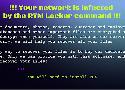
Uptycs threat research team discovered a new ransomware Linux binary attributed to the RTM group Locker, a known Ransomware-as-a-Service (RaaS) provider.
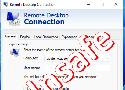
Did you know that RDP is unsafe without the use of additional protection like a VPN? In this blog post we will explain why and demonstrate the impact.

Researchers began to detect exploit attempts in the wild targeting the patched, high-severity flaw in TP-Link routers starting on April 11.

We found TrafficStealer abusing open container APIs in order to redirect traffic to specific websites and manipulate engagement with ads.

CRIL analyzes AMOS, a stealthy new information stealer targeting macOS and disseminating stolen information via Telegram.

VMware this week released patches for a critical vulnerability disclosed at the Pwn2Own Vancouver 2023 hacking contest.
eSentire’s Threat Response Unit (TRU), led by researchers Joe Stewart and Keegan Keplinger, have launched a multi-pronged offensive against a growing cyberthreat: the Gootloader Initial Access-as-a-Service Operation. The Gootloader Operation is an expansive cybercrime business, and it has been active since 2018. For the past 15 months, the Gootloader Operator has been launching ongoing attacks targeting legal professionals working for both law firms and corporate legal departments in the U.S., Canada, the U.K. and Australia. Between January and March 2023, TRU shut down Gootloader attacks against 12 different organizations, seven of which were law firms.
Researchers from Bitsight and Curesec have jointly discovered a high-severity vulnerability — tracked as CVE-2023-29552 — in the Service Location Protocol (SLP)
During our security research we found that smart phones with Qualcomm chip secretly send personal data to Qualcomm. This data is sent without user consent, unencrypted, and even when using a Google-free Android distribution. This is possible because the Qualcomm chipset itself sends the data, circumventing any potential Android operating system setting and protection mechanisms. Affected smart phones are Sony Xperia XA2 and likely the Fairphone and many more Android phones which use popular Qualcomm chips.
Here's an article from a French anarchist describing how his (encrypted) laptop was seized after he was arrested, and material from the encrypted partition has since been entered as evidence against him. His encryption password was supposedly greater than 20 characters and included a mixture of cases, numbers, and punctuation, so in the absence of any sort of opsec failures this implies that even relatively complex passwords can now be brute forced, and we should be transitioning to even more secure passphrases.
Or does it? Let's go into what LUKS is doing in the first place. The actual data is typically encrypted with AES, an extremely popular and well-tested encryption algorithm. AES has no known major weaknesses and is not considered to be practically brute-forceable - at least, assuming you have a random key. Unfortunately it's not really practical to ask a user to type in 128 bits of binary every time they want to unlock their drive, so another approach has to be taken.

How links between ‘hacktivists’ and official military are becoming blurred on both sides in the war.

CVE-2023-1671 is a pre-authenticated command injection in Sophos Web Appliance. In this blog post, VulnCheck researchers analyze the vulnerability and develop a proof of concept (PoC) for it.
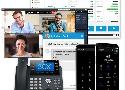
Hackers first compromised a different software maker and embedded malware in one of its programs. 3CX got compromised when a worker downloaded that program. It's not known why worker downloaded it.
Tallinn, Estonia – From 18 to 21 April, the NATO Cooperative Cyber Defense Center of Excellence (CCDCOE) is hosting Locked Shields 2023, the world’s largest live-fire cyber defense exercise. Over 3,000 participants from 38 nations are taking part in the exercise, which involves protecting real computer systems from real-time attacks and simulating tactical and strategic decisions in critical situations.

North Korean-linked operation affected more organizations beyond 3CX, including two critical infrastructure organizations in the energy sector.
Our team is tracking in-the-wild exploitation of zero-day vulnerabilities against PaperCut MF/NG which allow for unauthenticated remote code execution due to an authentication bypass.

Le CERT Santé revient sur la cyberattaque du centre hospitalier de Cahors suite à l’exploitation d’une faille de sécurité.

Learn how APT group, BlueNoroff, targets Apple with malware variant to compromise macOS devices.
We learned some remarkable new details this week about the recent supply-chain attack on VoIP software provider 3CX, a complex, lengthy intrusion that has the makings of a cyberpunk spy novel: North Korean hackers using legions of fake executive accounts…

Similarities with newly discovered Linux malware used in Operation DreamJob corroborate the theory that the 3CX attack was carried out by Lazarus.


