
Faster, easier and more secure sign-ins will be available to consumers across leading devices and platforms Mountain View, California, MAY 5, 2022 – In a joint effort to make the web […]

ISPs are quietly distributing "netflow" data that can, among other things, trace traffic through VPNs.

Nozomi Networks Labs has disclosed an unpatched vulnerability affecting the DNS of popular C standard libraries potentially in use by millions of IoT devices: uClibc and uClibc-ng.

We introduce UNC3524, a newly discovered suspected espionage threat actor targeting corporate emails.

Despite open source software’s essential role in all software built today, it’s far too easy for bad actors to circulate malicious packages that attack the systems and users running that software. Unlike mobile app stores that can scan for and reject malicious contributions, package repositories have limited resources to review the thousands of daily updates and must maintain an open model where anyone can freely contribute. As a result, malicious packages like ua-parser-js, and node-ipc are regularly uploaded to popular repositories despite their best efforts, with sometimes devastating consequences for users.

The Spanish government has said the mobile phones of the prime minister, Pedro Sánchez, and the defence minister, Margarita Robles, were both infected last year with the Pegasus spyware that its manufacturers claim is available only to state agencies.

Russia’s approach to cyber warfare against Ukraine has proved more subtle so far than many expected. This week’s Microsoft report on the operations reveals that Moscow-backed hackers have launched more than 200 cyberattacks against Ukraine, including nearly 40 destructive ones that targeted the country’s government organizations and critical sectors. Cyber experts say the analysis suggests…

Russian troops in the occupied city of Melitopol have stolen all the equipment from a farm equipment dealership -- and shipped it to Chechnya, according to a Ukrainian businessman in the area.
Today we’re pleased to announce the initial prototype version of the Package Analysis project, an OpenSSF project addressing the challenge of identifying malicious packages in popular open source repositories. In just one month of analysis, the project identified more than 200 malicious packages uploaded to PyPI and npm.

The pictures show neatly trimmed fiber optic cables dug up from underground behind what appears to be a well-hidden grate. The apparent simplicity of the sabotage is all the more harrowing in light of how extensively it disrupted Internet service in France, experts said.

While Mac enterprise networks are not as common as Windows, and subject to less targeting by adversaries, recent CrowdStrike Falcon Overwatch observations shed light on sophisticated tactics, techniques and procedures (TTPs) targeting Mac environments.
This joint Cybersecurity Advisory (CSA) was coauthored by cybersecurity authorities of the United States, Australia, Canada, New Zealand, and the United Kingdom: the Cybersecurity and Infrastructure Security Agency (CISA), National Security Agency (NSA), Federal Bureau of Investigation (FBI), Australian Cyber Security Centre (ACSC), Canadian Centre for Cyber Security (CCCS),
What does APT Activity Look Like on macOS?I often get asked what Advanced Persistent Activity (APT) or nation state hacking looks like on a macOS system. This is a great question and the answer is no

The identified vulnerability allows bypassing of Gatekeeper security and app notorization, has been patched by Apple.

KrbRelayUp - a universal no-fix local privilege escalation in windows domain environments where LDAP signing is not enforced (the default settings). - GitHub - Dec0ne/KrbRelayUp: KrbRelayUp - a universal no-fix local privilege escalation in windows domain environments where LDAP signing is not enforced (the default settings).

Microsoft has discovered several vulnerabilities, collectively referred to as Nimbuspwn, that could be chained together, allowing an attacker to elevate privileges to root on many Linux desktop endpoints. Leveraging Nimbuspwn as a vector for root access could allow attackers to achieve greater impact on vulnerable devices by deploying payloads and performing other malicious actions via arbitrary root code execution.

Against the backdrop of the conflict between Russia and Ukraine, the number of DDoS attacks in Q1 2022 increased by 4.5 times against Q1 2021. A significant proportion of them were by hacktivists.

We identified 80 zero-days exploited in the wild in 2021, more than we've seen in any year.

Operators of the LemonDuck botnet are targeting Docker instances in a cryptocurrency mining campaign.
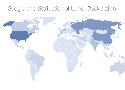
In this two-part blog series, we expose a modern malware infrastructure and provide guidance for protecting against the wide range of threats it enables. Part 1 covers the evolution of the threat, how it spreads, and how it impacts organizations. Part 2 is a deep dive on the attacker behavior and will provide investigation guidance.


