Bell Ambulance and Alabama Ophthalmology Associates have suffered data breaches affecting over 100,000 people after being targeted in ransomware attacks.
One of them is Milwaukee, WI-based Bell Ambulance, which provides ambulance services in the area. The company revealed last week in a data security notice that it detected a network intrusion on February 13, 2025.
An investigation showed that hackers gained access to files containing information such as name, date of birth, SSN, and driver’s license number, as well as financial, medical and health insurance information.
Bell Ambulance did not say in its public notice how many individuals are impacted, but the Department of Health and Human Services (HHS) data breach tracker revealed on Monday that 114,000 people are affected.
The Medusa ransomware group announced hacking Bell Ambulance in early March, claiming to have stolen more than 200 Gb of data from its systems.
The second healthcare organization to confirm a data breach impacting more than 100,000 people is Birmingham, AL-based ophthalmology practice Alabama Ophthalmology Associates.
SK Telecom, South Korea’s largest telecom company, disclosed a data leak involving a malware infection.
SK Telecom is South Korea’s largest wireless carrier — it has tens of millions of subscribers and holds roughly half of the local market.
The company revealed on Tuesday in a Korean-language statement posted on its website that it detected an intrusion on April 19. An investigation showed that the attackers deployed malware and managed to obtain personal information belonging to customers.
Following the incident, SK Telecom is offering customers a free SIM protection service designed to prevent SIM swapping, which suggests that the leaked data could be leveraged for such activities.


A detailed analysis of a multi-stage card skimming attack exploiting outdated Magento software and fake image files.
In today’s post we’re going to review a sophisticated, multi-stage carding attack on a Magento eCommerce website. This malware leveraged a fake gif image file, local browser sessionStorage data, and tampered with the website traffic using a malicious reverse-proxy server to facilitate the theft of credit card data, login details, cookies, and other sensitive data from the compromised website.
The client was experiencing some strange behaviour on their checkout page, including clients unable to input their card details normally, and orders not going through. They contacted us for assistance. Thinking this would be a straightforward case of credit card theft instead what we found was actually a fascinating and rather advanced malware which we will explore in detail in this post.
A new attack technique named Policy Puppetry can break the protections of major gen-AI models to produce harmful outputs.

SAP has released out-of-band emergency NetWeaver updates to fix a suspected remote code execution (RCE) zero-day flaw actively exploited to hijack servers.

MTN Group said an “unknown third-party has claimed to have accessed data linked” to parts of its system and that the incident “resulted in unauthorised access to personal information of some MTN customers in certain markets.”
A surveillance tool meant to keep tabs on employees is leaking millions of real-time screenshots onto the open web.
Your boss watching your screen isn't the end of the story. Everyone else might be watching, too. Researchers at Cybernews have uncovered a major privacy breach involving WorkComposer, a workplace surveillance app used by over 200,000 people across countless companies.
The app, designed to track productivity by logging activity and snapping regular screenshots of employees’ screens, left over 21 million images exposed in an unsecured Amazon S3 bucket, broadcasting how workers go about their day frame by frame.

Singaporean businessman Lu Heng is poised to capture Africa’s regional IP address regulator, and with it, the keys to control of much of the world's remaining IPv4 addresses

People playing Blizzard's RTS have spent the last year complaining about hackers doing terrible shit

ReliaQuest has observed SAP NetWeaver incidents with unauthorized file uploads and malicious execution, hinting at a possible unreported vulnerability.

In a sanctions package including more than 150 new measures, the British government said it was closing loopholes being exploited by the Kremlin.

We've previously, publicly and privately, analysed vulnerabilities in various ‘Backup and Replication’ platforms, including those offered by Veeam and NAKIVO - both of which have struggled to avoid scrutiny and in some cases, even opting to patch issues silently.
However, we’re glad to see that sense prevails - kudos to NAKIVO for acknowledging CVE-2024-48248 from our previous research and publicly responding to a new XXE vulnerability (CVE-2025-32406).
Backup and Replication solutions have become prime targets for ransomware operators for logical reasons — Veeam, for instance, has already seen widespread exploitation in the wild.

GreyNoise observed a 9X spike in suspicious scanning activity targeting Ivanti Connect Secure or Ivanti Pulse Secure VPN systems. More than 230 unique IPs probed ICS/IPS endpoints. This surge may indicate coordinated reconnaissance and possible preparation for future exploitation.
Combined with AI, polymorphic phishing emails have become highly sophisticated, creating more personalized and evasive messages that result in higher attack success rates.

Learn how JFrog detected a malicious package that steals MEXC credentials and crypto trading tokens to buy and sell futures on crypto trading platforms.

Between Sunday 14 April and Wednesday 17 April a total of 70 addresses were searched across the world, resulting in the arrest of 37 suspects. This includes the arrest of 4 individuals in the United Kingdom linked to the running of the site, including the original developer of the service.The LabHost platform, previously available on the open web, has been...

Discover advanced phishing techniques bypassing email security—Intezer reveals threats hidden in SVGs, PDFs, OneDrive, and OpenXML files.
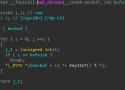
In a previous article of JPCERT/CC Eyes, we reported on SPAWNCHIMERA malware, which infects the target after exploiting the vulnerability in Ivanti Connect Secure. However, this is not the only malware observed in recent attacks. This time, we focus on another malware DslogdRAT and a web shell that were installed by exploiting a zero-day vulnerability at that time, CVE-2025-0282, during attacks against organizations in Japan around December 2024.

Key Findings The number of publicly-mentioned and extorted victims in Q1 reached the highest ever number, with a 126% increase year-over-year. Cl0p


