Inexpensive information-stealing malware surged in 2024, infecting 23 million hosts, according to Flashpoint.

Flashpoint data points to a surge in data breaches fueled by compromised credentials, ransomware and exploits
In iOS 18, Apple spun off its Keychain password management tool—previously only tucked away in Settings—into a standalone app called...
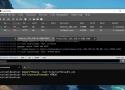
Strike 4.11 introduces a novel Sleepmask, a novel process injection technique, new out-of-the-box obfuscation options for Beacon, asynchronous BOFs, and a DNS over HTTPS (DoH) Beacon.

Facial Recognition Injection Attacks involve injecting tampered video feeds or deepfakes into facial recognition systems to bypass security. Current attack types include Virtual Video Injections, Hardware-based Video Injections, Device Emulation and Function Hooking.

I recently helped a company recover their data from the Akira ransomware without paying the ransom. I’m sharing how I did it, along with the full source code.
The code is here: https://github.com/yohanes/akira-bruteforce
To clarify, multiple ransomware variants have been named Akira over the years, and several versions are currently circulating. The variant I encountered has been active from late 2023 to the present (the company was breached this year).

Tinyhack publishes a full how-to guide on brute-forcing past the Akira ransomware's encryption attack and freeing captive files.

On February 11, 2025, a Russian speaking actor using the Telegram handle @ExploitWhispers [1], leaked internal chat logs of Black Basta Ransomware-as-a-Service (RaaS) members [2]. These communications, spanning from September 2023 to September 2024, provide an insider look on the group's operational tactics.

L’entreprise annonce s’efforcer de rétablir le plus rapidement possible son activité, après une attaque survenue dans la nuit de jeudi à vendredi. Une plainte a été déposée
For the third time in as many months, Apple has released an emergency patch to fix an already exploited zero-day vulnerability impacting a wide range of its products.
The new vulnerability, identified as CVE-2025-24201, exists in Apple's WebKit open source browser engine for rendering Web pages in Safari and other apps across macOS, iOS, and iPadOS. WebKit is a frequent target for attackers because of how deeply integrated it is with Apple's ecosystem.
Between late January and early March, Forescout Research – Vedere Labs identified a series of intrusions based on two Fortinet vulnerabilities. It began with the exploitation of Fortigate firewall appliances — culminating in the deployment of a newly discovered ransomware strain we have dubbed SuperBlack.

Domain system overseer plans to retire .su in 2030. ICANN has notified the operator of the legacy Soviet Union country code domain, .su, of its plans to retire the domain in five years, Domain Name Wire has learned. The .su namespace, which remains open for new registrations and currently has around 100,000 domain names, is […]

Threat actors have claimed a cyber attack on two businesses owned by US President Donald Trump, allegedly bringing down their websites.
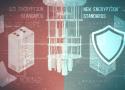
The new algorithm will serve as a backup for the general encryption needed to protect data from quantum computers developed in the future
Discover how the ClickFix social engineering attack exploits human psychology to bypass security. Learn how hackers use this tactic and how to protect against it.

Cybersecurity firm Lookout found several samples of a North Korean spyware it calls KoSpy.
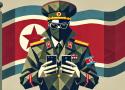
Lookout researchers have discovered a novel Android surveillance tool dubber KoSpy. It is attributed to APT 37 aka ScarCruft
Dans cette quatrième édition du panorama de la menace, l’Agence nationale de la sécurité des systèmes d’information (ANSSI) revient sur les grandes tendances de la menace informatique ainsi que sur les éléments et incidents marquants dont elle a eu connaissance en 2024.
Dans la continuité des années précédentes, l’ANSSI estime aujourd’hui que les attaquants liés à l’écosystème cybercriminel ou réputés liés à la Chine et la Russie constituent les trois principales menaces tant pour les systèmes d’information les plus critiques que pour l’écosystème national de manière systémique.
L’année 2024 aura également été marquée par l’organisation des Jeux Olympiques et Paralympiques de Paris ainsi que par le nombre et l’impact des vulnérabilités affectant les équipements de sécurité situés en bordure de SI.

Affected staff say more than 100 employees working to protect U.S. government networks were ‘axed’ with no prior warning