
A new Rust-based macOS malware spreading as a Visual Studio update to provide backdoor access to compromised systems uses infrastructure linked to the infamous ALPHV/BlackCat ransomware gang.
Chinese state-backed cyber spies gained access to a Dutch military network last year, Dutch intelligence agencies said on Tuesday, calling it part of a trend of Chinese political espionage against the Netherlands and its allies.

A Chinese cyber-espionage group breached the Dutch Ministry of Defence last year and deployed malware on compromised devices, according to the Military Intelligence and Security Service (MIVD) of the Netherlands.

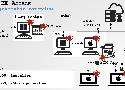
While most end users are well-acquainted with the dangers of traditional phishing attacks, such as those delivered via email or other media, a large proportion are likely unaware that Microsoft Teams chats could be a phishing vector. Most Teams activity is intra-organizational, but Microsoft enables External Access by default, which allows members of one organization to add users outside the organization to their Teams chats. Perhaps predictably, this feature has provided malicious actors a new avenue by which to exploit untrained or unaware users.

UNC4990 uses USB devices for initial infection, and is likely motivated by financial gain.

Arctic Wolf Labs has discovered, based on recent intrusion observations, a new Go-based malware loader named CherryLoader

An info-stealing PyPI malware author was identified discreetly uploading malicious packages.

We review a new macOS backdoor that piggybacks on cracked software to replace Bitcoin and Exodus wallets with malware.

Over 7,100 WordPress sites have been hit by the 'Balada Injector' malware, which exploits sites using a vulnerable version of the Popup Builder plugin

Jamf Threat Labs discovers new pirated macOS applications that establish communication with attacker infrastructure, allowing the victim's computer to be controlled by the attacker.

Multiple information stealers for the macOS platform have demonstrated the capability to evade detection even when security companies follow and report about new variants frequently.

Security researchers found that infections with high-profile spyware Pegasus, Reign, and Predator could be discovered on compromised Apple mobile devices by checking Shutdown.log, a system log file that stores reboot events.
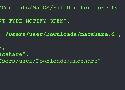
In both his twitter (err, X) thread and in a subsequent posting he provided a comprehensive background and triage of the malware dubbed SpectralBlur. In terms of its capabilities he noted:
SpectralBlur is a moderately capable backdoor, that can upload/download files, run a shell, update its configuration, delete files, hibernate or sleep, based on commands issued from the C2. -Greg
He also pointed out similarities to/overlaps with the DPRK malware known as KandyKorn (that we covered in our “Mac Malware of 2024” report), while also pointing out there was differences, leading him to conclude:
We can see some similarities ... to the KandyKorn. But these feel like families developed by different folks with the same sort of requirements. -Greg
A comprehensive analysis of the year's new malware

Downfall, a fan expansion for the popular Slay the Spire indie strategy game, was breached on Christmas Day to push Epsilon information stealer malware using the Steam update system.
Microsoft has again disabled the MSIX ms-appinstaller protocol handler after multiple financially motivated threat groups abused it to infect Windows users with malware.

Recent iPhone models have additional hardware-based security protection for sensitive regions of the kernel memory. We discovered that to bypass this hardware-based security protection, the attackers used another hardware feature of Apple-designed SoCs.

Beware of phishing emails with invoice-themed attachments! Attackers are using an old Office vulnerability (CVE-2017-11882) to spread the Agent Tesla

Qakbot, a versatile malware threat, returned after a takedown in August. The new campaign targets the hospitality industry with IRS-themed phishing emails containing malicious PDFs. Microsoft identified the attack, offering two IP addresses for blocking and a way to detect the malware's digital signature.