wired.com
Andy Greenberg
The Big Story
Dec 4, 2025 12:00 PM
Privacy stalwart Nicholas Merrill spent a decade fighting an FBI surveillance order. Now he wants to sell you phone service—without knowing almost anything about you.
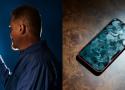
Nicholas Merrill has spent his career fighting government surveillance. But he would really rather you didn’t call what he’s selling now a “burner phone.”
Yes, he dreams of a future where anyone in the US can get a working smartphone—complete with cellular coverage and data—without revealing their identity, even to the phone company. But to call such anonymous phones “burners” suggests that they’re for something illegal, shady, or at least subversive. The term calls to mind drug dealers or deep-throat confidential sources in parking garages.
With his new startup, Merrill says he instead wants to offer cellular service for your existing phone that makes near-total mobile privacy the permanent, boring default of daily life in the US. “We're not looking to cater to people doing bad things,” says Merrill. “We're trying to help people feel more comfortable living their normal lives, where they're not doing anything wrong, and not feel watched and exploited by giant surveillance and data mining operations. I think it’s not controversial to say the vast majority of people want that.”
That’s the thinking behind Phreeli, the phone carrier startup Merrill launched today, designed to be the most privacy-focused cellular provider available to Americans. Phreeli, as in, “speak freely,” aims to give its user a different sort of privacy from the kind that can be had with end-to-end encrypted texting and calling tools like Signal or WhatsApp. Those apps hide the content of conversations, or even, in Signal’s case, metadata like the identities of who is talking to whom. Phreeli instead wants to offer actual anonymity. It can’t help government agencies or data brokers obtain users’ identifying information because it has almost none to share. The only piece of information the company records about its users when they sign up for a Phreeli phone number is, in fact, a mere ZIP code. That’s the minimum personal data Merrill has determined his company is legally required to keep about its customers for tax purposes.
By asking users for almost no identifiable information, Merrill wants to protect them from one of the most intractable privacy problems in modern technology: Despite whatever surveillance-resistant communications apps you might use, phone carriers will always know which of their customers’ phones are connecting to which cell towers and when. Carriers have frequently handed that information over to data brokers willing to pay for it—or any FBI or ICE agent that demands it with a court order
Merrill has some firsthand experience with those demands. Starting in 2004, he fought a landmark, decade-plus legal battle against the FBI and the Department of Justice. As the owner of an internet service provider in the post-9/11 era, Merrill had received a secret order from the bureau to hand over data on a particular user—and he refused. After that, he spent another 15 years building and managing the Calyx Institute, a nonprofit that offers privacy tools like a snooping-resistant version of Android and a free VPN that collects no logs of its users’ activities. “Nick is somebody who is extremely principled and willing to take a stand for his principles,” says Cindy Cohn, who as executive director of the Electronic Frontier Foundation has led the group’s own decades-long fight against government surveillance. “He's careful and thoughtful, but also, at a certain level, kind of fearless.”
More recently, Merrill began to realize he had a chance to achieve a win against surveillance at a more fundamental level: by becoming the phone company. “I started to realize that if I controlled the mobile provider, there would be even more opportunities to create privacy for people,” Merrill says. “If we were able to set up our own network of cell towers globally, we can set the privacy policies of what those towers see and collect.”
Building or buying cell towers across the US for billions of dollars, of course, was not within the budget of Merrill’s dozen-person startup. So he’s created the next best thing: a so-called mobile virtual network operator, or MVNO, a kind of virtual phone carrier that pays one of the big, established ones—in Phreeli’s case, T-Mobile—to use its infrastructure.
The result is something like a cellular prophylactic. The towers are T-Mobile’s, but the contracts with users—and the decisions about what private data to require from them—are Phreeli’s. “You can't control the towers. But what can you do?” he says. “You can separate the personally identifiable information of a person from their activities on the phone system.”
Signing up a customer for phone service without knowing their name is, surprisingly, legal in all 50 states, Merrill says. Anonymously accepting money from users—with payment options other than envelopes of cash—presents more technical challenges. To that end, Phreeli has implemented a new encryption system it calls Double-Blind Armadillo, based on cutting-edge cryptographic protocols known as zero-knowledge proofs. Through a kind of mathematical sleight of hand, those crypto functions are capable of tasks like confirming that a certain phone has had its monthly service paid for, but without keeping any record that links a specific credit card number to that phone. Phreeli users can also pay their bills (or rather, prepay them, since Phreeli has no way to track down anonymous users who owe them money) with tough-to-trace cryptocurrency like Zcash or Monero.
A handful cryptographers were asked for feedback on the architecture of the European Identity Wallet (the Architecture Reference Framwork (ARF), currently at version 1.4.0). We seized the opportunity to write a short report to urge Europe to reconsider the design, and to base it on the use of anonymous (aka attribute-based) credentials.
Anonymous credentials were designed specifically to achieve authentication and identification that are both secure and privacy-preserving. As a result, they fully meet the requirements put forth in the eiDAS 2.0 regulation. (The current design does not.) Moreover, they are by now a mature technology. In particular we recommend to use the BBS family of anonymous credentials, which are efficient and mathematically proven secure.

In a recent regulatory development, the European Union (EU) has voted to ban cryptocurrency payments to "hosted wallets" using unidentified self-custody crypto wallets.

Si ces attaques, qui ont commencé dimanche soir, ont été d’une « intensité inédite », les services du premier ministre ont précisé lundi que leur impact avait été « réduit ». Elles ont été revendiquées par Anonymous Sudan, qui regroupe des militants prorusses.
Anonymous has struck Russia again by leaking 1TB of data from a leading Russian law firm identified as Rustam Kurmaev and Partners (RKP Law).

En luttant contre le groupe Killnet, Anonymous espère réduire le nombre d'attaques en ligne portées par ce dernier à l'encontre des gouvernements de plusieurs pays membres de l'OTAN

The Pro-Russia Hacker Group Killnet recently targeted European institutions, while Anonymous hackers are already claiming to have leaked its data.
The latest is a printer hack, which allows the collective to send a message across the transcontinental country.
The group has claimed credit for hacking the Russian Ministry of Defence database, and is believed to have hacked multiple state TV channels to show pro-Ukraine content


