
bleepingcomputer.com
By Sergiu Gatlan
December 30, 2025
Two former employees of cybersecurity incident response companies Sygnia and DigitalMint have pleaded guilty to targeting U.S. companies in BlackCat (ALPHV) ransomware attacks in 2023.
Two former employees of cybersecurity incident response companies Sygnia and DigitalMint have pleaded guilty to targeting U.S. companies in BlackCat (ALPHV) ransomware attacks in 2023.
33-year-old Ryan Clifford Goldberg of Watkinsville, Georgia (in federal custody since September 2023), and 28-year-old Kevin Tyler Martin of Roanoke, Texas, who were charged in November, have now pleaded guilty to conspiracy to obstruct commerce by extortion and are set to be sentenced on March 12, 2026, facing up to 20 years in prison each.
Together with a third accomplice, the two BlackCat ransomware affiliates breached the networks of multiple victims across the United States between May 2023 and November 2023, paying a 20% share of ransoms in exchange for access to BlackCat's ransomware and extortion platform.
Goldberg is a former Sygnia incident response manager, and Martin worked at DigitalMint as a ransomware threat negotiator (just as the unnamed co-conspirator).
"These defendants used their sophisticated cybersecurity training and experience to commit ransomware attacks — the very type of crime that they should have been working to stop," said Assistant Attorney General A. Tysen Duva. "Extortion via the internet victimizes innocent citizens every bit as much as taking money directly out of their pockets."
According to court documents, their alleged victims include a Maryland pharmaceutical company, a California engineering firm, a Tampa medical device manufacturer, a Virginia drone manufacturer, and a California doctor's office.
While they have demanded ransoms ranging from $300,000 to $10 million, prosecutors said they were only paid $1.27 million by the Tampa medical device company after encrypting its servers and demanding $10 million in May 2023. While other victims also received ransom demands, the indictment does not indicate whether additional payments were made.
As BleepingComputer previously reported, the Justice Department was also investigating a former DigitalMint negotiator in July for allegedly working with ransomware groups. However, the DOJ and FBI did not comment on the investigation, and it is unclear if this case is related to it.
In December 2023, the FBI created a decryption tool after breaching BlackCat's servers to monitor their activities and obtain decryption keys. The FBI also found that the BlackCat operation collected at least $300 million in ransom payments from more than 1,000 victims until September 2023.
In a February 2024 joint advisory, the FBI, CISA, and the Department of Health and Human Services (HHS) also warned that Blackcat affiliates were primarily targeting organizations in the U.S. healthcare sector.
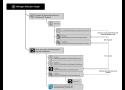
In November 2023, we identified a BlackCat ransomware intrusion started by Nitrogen malware hosted on a website impersonating Advanced IP Scanner.
Nitrogen was leveraged to deploy Sliver and Cobalt Strike beacons on the beachhead host and perform further malicious actions. The two post-exploitation frameworks were loaded in memory through Python scripts.
After obtaining initial access and establishing further command and control connections, the threat actor enumerated the compromised network with the use of PowerSploit, SharpHound, and native Windows utilities. Impacket was employed to move laterally, after harvesting domain credentials.
The threat actor deployed an opensource backup tool call Restic on a file server to exfiltrate share data to a remote server.
Eight days after initial access the threat actor modified a privileged user password and deployed BlackCat ransomware across the domain using PsExec to execute a batch script.
Six rules were added to our Private Ruleset related to this intrusion.
The U.S. State Department on Wednesday offered up to $10 million for information on the "Blackcat" ransomware gang who hit the UnitedHealth Group's tech unit and snarled insurance payments across America.
"The ALPHV Blackcat ransomware-as-a-service group compromised computer networks of critical infrastructure sectors in the United States and worldwide," the department said in a statement announcing the reward offer.
website used by hackers responsible for a breach at UnitedHealth Group (UNH.N), opens new tab has been replaced by a notice saying it has been seized by international law enforcement.
But at least one of the agencies allegedly responsible said it had nothing to do with the seizure, raising the possibility that the hackers - who also go by the moniker ALPHV - faked their own takedown.
A message posted to the website of the Blackcat hacking gang on Tuesday said it had been impounded "as part of a coordinated law enforcement action" by U.S. authorities and other law enforcement agencies. Among the logos of non-American agencies involved were those of Europol and Britain's National Crime Agency.
The BlackCat ransomware gang is pulling an exit scam, trying to shut down and run off with affiliates' money by pretending the FBI seized their site and infrastructure.

The ALPHV/BlackCat ransomware gang has shut down its servers amid claims that they scammed the affiliate responsible for the attack on Optum, the operator of the Change Healthcare platform, of $22 million.

The gang claimed responsibility for a high-profile attack against Change Healthcare Wednesday.
This blog post provides a detailed look at the TTPs of a ransomware affiliate operator. In this case, the endpoint had been moved to another infrastructure (as illustrated by various command lines, and confirmed by the partner), so while Huntress SOC analysts reported the activity to the partner, no Huntress customer was impacted by the ransomware deployment.
A new Rust-based macOS malware spreading as a Visual Studio update to provide backdoor access to compromised systems uses infrastructure linked to the infamous ALPHV/BlackCat ransomware gang.
Le site vitrine de la franchise Alphv/BlackCat affiche désormais un message indiquant qu’il a été saisi par les autorités. Mais une vitrine alternative est en ligne, mais le coup est très sérieux.
The Justice Department announced today a disruption campaign against the Blackcat ransomware group — also known as ALPHV or Noberus — that has targeted the computer networks of more than 1,000 victims and caused harm around the world since its inception, including networks that support U.S. critical infrastructure.
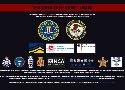
The FBI says it has released a decryption tool allowing hundreds of ALPHV/BlackCat victims to restore their scrambled files.

While the main trend in the cyber threat landscape in recent months has been MoveIt and Cl0p, NCC Groups’ Cyber Incident Response Team have also been handling multiple different ransomware groups over the same period.
In the ever-evolving cybersecurity landscape, one consistent trend witnessed in recent years is the unsettling rise in ransomware attacks. These nefarious acts of digital extortion have left countless victims scrambling to safeguard their data, resources, and even their livelihoods. To counter this threat, every person in the cyber security theatre has a responsibility to shine light on current threat actor Tactics, Techniques and Procedures (TTP’S) to assist in improving defences and the overall threat landscape.

The BlackCat (ALPHV) ransomware gang now uses stolen Microsoft accounts and the recently spotted Sphynx encryptor to encrypt targets' Azure cloud storage.

Threat actors associated with the BlackCat ransomware have been observed employing malvertising tricks to distribute rogue installers of the WinSCP file transfer application.

We found that malicious actors used malvertising to distribute malware via cloned webpages of legitimate organizations. The distribution involved a webpage of the well-known application WinSCP, an open-source Windows application for file transfer. We were able to identify that this activity led to a BlackCat (aka ALPHV) infection, and actors also used SpyBoy, a terminator that tampers with protection provided by agents.

In this blog post, we will provide details on a BlackCat ransomware incident that occurred in February 2023, where we observed a new capability, mainly used for the defense evasion phase.
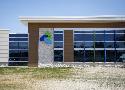
A ransomware gang has posted photos of Lehigh Valley Health Network cancer patients on the dark web after the health network refused to pay a ransom last month following a cyberattack.

La nuova funzione implementata ieri da BlackCat, esporrà le vittime colpite anche su Internet, con una diffusione più massiccia e pubblica dei dati rubati, con nome di dominio autentico intestato alla vittima stessa
Cybercrime groups that specialize in stealing corporate data and demanding a ransom not to publish it have tried countless approaches to shaming their victims into paying. The latest innovation in ratcheting up the heat comes from the ALPHV/BlackCat ransomware group,…


