Gen Blogs | gendigital.com
Threat Research Team
November 19, 2025
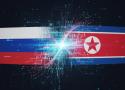
State-sponsored hacking groups typically operate in isolation, each advancing its own nation’s goals. That’s why any sign of collaboration between them is cause for concern. Yet new evidence uncovered by Gen researchers suggests that two of the world’s most aggressive advanced persistent threat (APT) actors, Russia-aligned Gamaredon and North Korea’s Lazarus, may be operating on shared infrastructure.
This discovery hints at something much bigger than mere technical overlap. It points to a possible new stage in cyber conflict, where geopolitical alliances are mirrored in shared digital operations.
From allies on the battlefield to partners online
Russia and North Korea have maintained a long-standing partnership rooted in shared political and military interests. Moscow backed Pyongyang during and after the Korean War, and in 2024 both nations renewed that alliance through a Comprehensive Strategic Partnership that includes mutual defense commitments.
Since 2022, Pyongyang has stepped up its support for Moscow, formally recognizing Russian-claimed territories in Ukraine and reportedly supplying munitions and troops. In 2024, Reuters reported that North Korean soldiers had been deployed to fight alongside Russian forces in Ukraine, a striking example of the two countries’ deepening cooperation.
Now, we may be witnessing a digital extension of that alliance. On July 28, 2025, Gen’s internal monitoring systems detected a suspicious event linking Gamaredon and Lazarus activity through a shared IP address. The implications are significant: two state-backed actors from different countries may be coordinating at an operational level.
This development aligns with broader patterns highlighted in the Q3/2025 Threat Report, where state sponsored operations showed increasing sophistication, coordination, and diversification of infrastructure. While those observations were confined within national ecosystems, the Gamaredon–Lazarus overlap suggests that similar dynamics may now be emerging across national boundaries.
Background
Gamaredon
Gamaredon is a Russian-aligned APT active since at least 2013, primarily focused on cyber espionage. In 2021, the Security Service of Ukraine issued a press release, attributing several members of the group as part of Russia's Federal Security Service (FSB) 18th Information Security Center. Since its official inception, the group is believed to have conducted more than 5000 cyber-attacks, most of which targeted Ukrainian government agencies. However, with the onset of war in Ukraine, ESET reported that Gamaredon expanded its operations to include NATO member states, likely aiming to disrupt military aid to Ukraine, underscoring the group’s prioritization of hybrid warfare.
Lazarus
Lazarus is a state-sponsored threat actor active since 2009 and widely believed to operate under North Korea’s government. Initially focused on cyber espionage and destructive attacks, Lazarus later shifted toward financially motivated operations to fund future campaigns. In 2021, the United States Department of Justice indicted three members believed to be part of the Lazarus group, connecting them to North Korea’s Reconnaissance General Bureau (RGB), the country’s primary intelligence agency. With the rise of cryptocurrency, Lazarus increasingly targeted digital assets, as evidenced by high-profile breaches such as Stake.com ($41 million), AtomicWallet ($100 million), WazirX ($235 million), and Bybit ($1.4 billion).
Where Gamaredon spies, Lazarus steals, but both ultimately serve their governments’ strategic interests.
The discovery: a shared digital footprint
Just one day after the announcement of new direct flights between Moscow and Pyongyang, Gen identified indicators of a potential collaboration between the Gamaredon and Lazarus APTs. On July 24, 2025, our system tracking Gamaredon’s Command-and-Control (C2) servers via known Telegram and Telegraph channels blocked an IP address:
144[.]172[.]112[.]106
Four days later, during a routine check, the same server was found hosting an obfuscated version of InvisibleFerret (SHA256: 128da948f7c3a6c052e782acfee503383bf05d953f3db5c603e4d386e2cf4b4d), a malware strain attributed to Lazarus. The payload matched Lazarus’ tooling and was delivered through an identical server structure (URL: http[://]144[.]172[.]112[.]106/payload/99/81) previously seen in ContagiousInterview, a Lazarus campaign that targeted job seekers with fake recruitment messages. While the IP could represent a proxy or VPN endpoint, the temporal proximity of both groups’ activity and the shared hosting pattern indicate probable infrastructure reuse, with moderate confidence of operational collaboration. Whether Lazarus leveraged a Gamaredon-controlled server or both actors shared the same client instance remains unclear, but the overlap is too close to ignore.
Implications for the global threat landscape
Cross-country collaborations in the APT ecosystem remain exceptionally rare. The last widely acknowledged example dates back to 2014 with the Regin malware, reportedly co-developed by the U.S. National Security Agency (NSA) and the U.K.’s Government Communications Headquarters (GCHQ).
If confirmed, the Gamaredon–Lazarus overlap would represent the first known case of Russian–North Korean cyber collaboration in the wild.
Such a partnership could have wide-ranging implications:
Operational synergy: Lazarus’s expertise in monetizing cyberattacks through cryptocurrency theft could help Gamaredon fund or conceal future operations.
Strategic alignment: Russia, facing mounting economic and military pressure, could benefit from North Korea’s established infrastructure for covert financial operations.
Escalation potential: This kind of collaboration blurs the line between espionage, sabotage, and organized cybercrime, expanding both nations’ offensive reach.
Not an isolated case: national ecosystems are merging
While cross-border APT collaboration is rare, cooperation within national ecosystems has become increasingly common.
Lazarus x Kimsuky
Kimsuky is another North Korean APT group. It has been active since around 2012 and assessed by Mandiant to operate under the RGB. The group specializes in advanced cyber-espionage campaigns, primarily targeting government entities and consumer-facing organizations.
During analysis of Lazarus’ ContagiousInterview payloads, Gen researchers found that an IP address (216[.]219[.]87[.]41) later reappeared in Kimsuky-linked payloads (e.g., cce27340fd6f32d96c65b7b1034c65d5026d7d0b96c80bcf31e40ab4b8834bcd). This suggests infrastructure reuse or coordination between RGB units, evidence of alignment at North Korea’s national level.
DoNot x SideWinder
DoNot and SideWinder are state-sponsored APT groups believed to have been active since 2013 and 2012, respectively, both with ties to the Indian government and a primary focus on cyber espionage.
Gen identified a DoNot-attributed payload (8bb089d763d5d4b4f96ae59eb9d8f919e6a49611c183f636bfd5c01696447938) that later executed a known SideWinder loader (f4d10604980f8f556440460adc71883f04e24231d0a9a3a323a86651405bedfb). The victim was located in Pakistan, consistent with the typical targeting profile of both groups. This cooperation resembles the previously observed Gamaredon x Turla collaboration, indicating that intra-country partnerships are becoming a tactical norm.
A new phase in cyber geopolitics
The evidence of infrastructure overlap between Lazarus and Gamaredon represents a significant development in the global threat landscape. Historically, cross-country APT collaborations have been exceedingly rare, with only a handful of confirmed cases such as Stuxnet and Regin. This potential partnership signals a shift toward more complex and unpredictable alliances, where geopolitical interests may drive operational convergence.
While the Lazarus–Gamaredon case stands out for its strategic implications, the observed intranational collaborations, such as Lazarus with Kimsuky and DoNot with SideWinder, are equally important. These partnerships demonstrate a growing trend of resource sharing and tactical alignment within national ecosystems, amplifying the reach and resilience of state-sponsored campaigns.
For defenders, these findings underscore an urgent need to adapt detection strategies beyond single-actor attribution. Shared infrastructure, overlapping TTPs, and modular malware frameworks mean that traditional attribution models may fail to capture the full scope of risk. Security teams must:
Enhance infrastructure correlation analysis to detect cross-group overlaps early.
Prioritize intelligence sharing across organizations and sectors to identify emerging alliances.
Implement layered defenses capable of mitigating diverse tactics from multiple threat actors leveraging common resources.
The era of isolated APT operations is fading. As adversaries evolve through collaboration, defenders must respond with equal agility and cooperation to safeguard critical assets.
One of the challenges with investigating cybercrime is the infrastructure the adversaries leverage to conduct attacks. Cybercriminal infrastructure has evolved drastically over the last 25 years, which now involves hijacking web services, content distribution networks (CDNs), residential proxies, fast flux DNS, domain generation algorithms (DGAs), botnets of IoT devices, the Tor network, and all sorts of nested services.
This blog shall investigate a small UK-based hosting provider known as BitLaunch as an example of how challenging it can be to tackle cybercriminal infrastructure. Research into this hosting provider revealed that they appear to have a multi-year history of cybercriminals using BitLaunch to host command-and-control (C2) servers via their Anonymous VPS service.

We examine malicious Cobalt Strike case studies with distinct techniques using Malleable C2 profiles.

This blog post seeks to draw out some high-level trends and anomalies based on our ongoing tracking of QakBot command and control (C2) infrastructure. By looking at the data with a broader scope, we hope to supplement other research into this particular threat family, which in general focuses on specific infrastructure elements; e.g., daily alerting on active C2 servers.
Uptycs has already identified three Windows-based malware families that use Telegram this year, including Titan Stealer, Parallax RAT, and HookSpoofer. Attackers are increasingly turning to it, particularly for stealer command and control (C2).
And now the Uptycs threat research team has discovered a macOS stealer that also controls its operations over Telegram. We’ve dubbed it MacStealer.

ThreatLabz observed a new campaign targeting a Government organization in which the threat actors utilized a new Command & Control (C2) framework named Havoc

Key Takeaways

Threat actors evade detection by adopting the Sliver command-and-control (C2) framework in intrusion campaigns.
DGA is one of the classic techniques for botnets to hide their C2s, attacker
only needs to selectively register a very small number of C2 domains, while for
the defenders, it is difficult to determine in advance which domain names will
be generated and registered.


Unit 42 continuously hunts for new and unique malware samples that match known advanced persistent threat (APT) patterns and tactics. On May 19, one such sample was uploaded to VirusTotal, where it received a benign verdict from all 56 vendors that evaluated it. Beyond the obvious detection concerns, we believe this sample is also significant in terms of its malicious payload, command and control (C2), and packaging.
We discovered that Gimmick MacOS malware communicates only through their C2 server hosted on Google Drive. The malware was discovered in the first week of May and it has been actively targeting macOS devices
During our analysis of the Penquin-related infrastructure we reported in our previous post, we paid special attention to the malicious binaries contacting these IP addresses, since as we showed in the analysis, they had been used as C2 of other threats used by Turla.


