thehill.com
by Julia Shapero - 03/31/26 12:12 PM ET
Iran’s Islamic Revolutionary Guard Corps (IRGC) said Tuesday that it plans to target major U.S. technology companies across the Middle East, including Apple, Microsoft and Google, on Wednesday amid the ongoing war.
In a statement published by Sepah News, the IRGC’s official news outlet, the military arm named 18 companies that it accused of being involved in planning and tracking targets for U.S. attacks.
This included Meta, Nvidia, Oracle, Tesla, HP, Intel and IBM. The only non-U.S. company on the list appears to be the United Arab Emirates’s (UAE) AI champion G42.
The IRGC advised employees to leave their workplaces immediately, noting that it planned to begin targeting these firms Wednesday at 8 p.m. local time.
Iran has previously listed American tech companies as potential targets amid the conflict. In early March, Iranian drones struck and damaged several Amazon data centers in the UAE and Bahrain.
As tech firms and infrastructure become targets, it has increasingly raised concerns about large-scale AI investments in the region.
Countries including the UAE and Saudi Arabia have attracted significant AI spending, particularly over the past year, as President Trump has embraced the Middle East as a key partner in the AI race against China.
cybernews.com/
Vilius Petkauskas
Deputy Editor
Luxshare, one of Apple’s key partners in assembling iPhones, AirPods, Apple Watches, and Vision Pro, allegedly suffered a data breach, orchestrated by a ransomware cartel. The attackers are threatening to leak data from Apple, Nvidia, and LG unless the company pays a ransom.
Key takeaways:
Luxshare, Apple's key iPhone assembler, allegedly suffered a ransomware attack threatening confidential product data leaks from multiple tech giants.
RansomHub attackers claim access to 3D CAD models, circuit board designs, and engineering documentation from Apple and Nvidia products.
Cybernews researchers claim leaked data includes confidential Apple-Luxshare repair projects, employee PII, and product design files from 2019-2025.
The breach could enable competitors to reverse-engineer products, manufacture counterfeits, and exploit hardware vulnerabilities in Apple devices.
Key Takeaways by nexos.ai, reviewed by Cybernews staff.
The Luxshare data breach allegedly occurred last month, with attackers claiming December 15th, 2025, as the date Apple key partners’ data was encrypted. The alleged attackers, RansomHub, announced the Luxshare data breach on their dark web forum.
Luxshare is an essential partner to the American giant. Many Apple products, including iPhone, AirPods, Apple Watch are assembled at Luxshare, which means the company has very intimate information about Apple’s products.
The conversation on this topic is live. Join in the discussion.
“We were waiting for you for quite some time, but it seems that your IT department decided to conceal the incident that took place in your company. We strongly recommend that you contact us to prevent your confidential data and project documents from being leaked,” the attackers claim.
We have reached out to the company and will update the article once we receive a reply. We have also reached out to Apple and will add its response as soon as we receive it.
Luxshare data breach claims on the dark web
Attakers' post announcing Luxshare data breach. Image by Cybernews.
What data did the Luxshare data breach expose?
The Cybernews research team investigated the data sample that the attackers attached to the post.
According to our team, the leaked data includes details on what appear to be confidential projects regarding device repair and shipping between Apple and Luxshare, including timelines, detailed processes, and information about other Luxshare clients.
Moreover, the leaked information appears to include personal identifiable information (PII) of individuals working on specific projects, with their full names, job positions and work emails exposed.
Luxshare data breach projects
Alleged information on Apple and Luxshare projects. Image by Cybernews.
“Dates of these projects range from 2019 to 2025 and the information appears to expose sensitive business operations. Additionally, .dwg and gerber files, which are often used to create product model designs, are also included,” the team explained.
While Apple’s assembler data breach is still unconfirmed, the team believes that the information included in the post appears to be legitimate.
Luxshare data breach team info
Alleged information about Luxshare staff working on Apple projects. Image by Cybernews.
What do the Luxshare attackers say?
The RansomHub attackers claim to have wide access to confidential Luxshare client data. The stolen data supposedly ranges from 3D product models to circuit board design data, information that’s highly coveted by corporate spies.
According to the attackers, they have accessed archives that contain:
Confidential 3D CAD product models, 3D engineering design data, 3D engineering documentation
Access to high-precision geometric data for Parasolid products
2D component drawings for manufacturing
Mechanical component drawings
Confidential engineering drawings in PDF format
Electronic design documentation
Electrical and layout architecture data
Printed circuit board manufacturing data
“The archives contain data from Apple, Nvidia, as well as LG, Geely, Tesla, and other large companies whose production and R&D information is publicly available. Protected by a non-disclosure agreement,” the attackers claim.
If confirmed, the attack could be disastrous for Luxshare and its partners. For one, attackers could sell the data to competitors who could utilize the stolen details to reverse-engineer products, bypass years of R&D, and manufacture counterfeits.
The cybersecurity implications are also extreme as attackers could clearly uncover hardware vulnerabilities, chip locations, and power systems, which would be beneficial to target firmware or carry out supply chain attacks.
China-based Luxshare is a behemoth in the electronics manufacturing industry. Based in the country’s tech heart, Shenzhen, the company employs over 230,000 people and reports revenues of over $37 billion.
According to reporting by the Wall Street Journal, Luxshare’s importance to Apple’s supply chain ballooned after its main assembler, Foxconn, went through a series of production halting protests.
Who are the Luxshare attackers?
First spotted in 2024, RansomHub is a well established actor in the ransomware scene. For example, the gang proved itself to be one of the most active ransomware gangs of the past couple of years.
According to security experts, RansomHub is among the most prolific ransomware-as-a-service (RaaS) operations, emerging after ALPHV (BlackCat) disappeared. It primarily targets industrial manufacturing and healthcare.
RansomHub brought some technological innovations to the table. Its tools are capable of remote encryption. The affiliates exploit exposed unprotected machines, reducing the risk of detection and increasing the success rate of attacks.
According to a CISA advisory, the cybercrooks breached nearly 500 victims in 2024, almost at a rate of one victim per day. The cyber watchdog also provides a full list of the Kremlin-backed gang's known IOCs, including IP addresses, tools, known URLs, email addresses, and more.
Updated on January 19th [01:30 p.m. GMT] with a insights from the Cybernews research team.
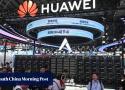
South China Morning Post scmp.com Published: 5:00pm, 12 Aug 2025 - Chinese tech firms are leveraging software improvements to compensate for limited access to advanced hardware.
Huawei Technologies has unveiled a software tool designed to accelerate inference in large artificial intelligence models, an advancement that could help China reduce its reliance on expensive high-bandwidth memory (HBM) chips.
Unified Cache Manager (UCM) is an algorithm that allocates data according to varying latency requirements across different types of memories – including ultra-fast HBM, standard dynamic random access memory and solid-state drive – thereby enhancing inference efficiency, according to Huawei executives at the Financial AI Reasoning Application Landing and Development Forum in Shanghai on Tuesday.
Zhou Yuefeng, vice-president and head of Huawei’s data storage product line, said UCM demonstrated its effectiveness during tests, reducing inference latency by up to 90 per cent and increasing system throughput as much as 22-fold.
The move exemplifies how Chinese tech firms are leveraging software improvements to compensate for limited access to advanced hardware. Earlier this year, Chinese start-up DeepSeek captured global attention by developing powerful AI models with constrained chip resources.
Huawei plans to open-source UCM in September, first in its online developer community and later to the broader industry. The initiative could help China lessen its dependence on foreign-made HBM chips, a market mostly controlled by South Korea’s SK Hynix and Samsung Electronics, as well as the US supplier Micron Technology.
HBM is a stacked, high-speed, low-latency memory that provides substantial data throughput to AI chips, enabling optimal performance. The global HBM market is projected to nearly double in revenue this year, reaching US$34 billion, and is expected to hit US$98 billion by 2030, largely driven by the AI boom, according to consulting firm Yole Group.
The Wiz Research team has discovered a chain of critical vulnerabilities in NVIDIA's Triton Inference Server, a popular open-source platform for running AI models at scale. When chained together, these flaws can potentially allow a remote, unauthenticated attacker to gain complete control of the server, achieving remote code execution (RCE).
This attack path originates in the server's Python backend and starts with a minor information leak that cleverly escalates into a full system compromise. This poses a critical risk to organizations using Triton for AI/ML, as a successful attack could lead to the theft of valuable AI models, exposure of sensitive data, manipulating the AI model's responses and a foothold for attackers to move deeper into a network.
Wiz Research responsibly disclosed these findings to NVIDIA, and a patch has been released. We would like to thank the NVIDIA security team for their excellent collaboration and swift response. NVIDIA has assigned the following identifiers to this vulnerability chain: CVE-2025-23319, CVE-2025-23320, and CVE-2025-23334. We strongly recommend all Triton Inference Server users update to the latest version. This post provides a high-level overview of these new vulnerabilities and their potential impact.
The enclosed work is the latest in a series of NVIDIA vulnerabilities we’ve disclosed, including two container escapes: CVE-2025-23266 and CVE 2024-0132.
Mitigations
Update Immediately: The primary mitigation is to upgrade both the NVIDIA Triton Inference Server and the Python backend to version 25.07 as advised in the NVIDIA security bulletin.
Wiz customers can use the following to detect vulnerable instances in their cloud environment:
Wiz customers can use the Vulnerability Findings page to find all instances of these vulnerabilities in their environment, or filter results to instances related to critical issues. Alternatively, you can use the Security Graph to identify publicly exposed vulnerable VMs/serverless or containers.
Wiz Advanced customers can filter on findings identified or validated by the Dynamic Scanner, and Wiz Sensor customers can filter on runtime validated findings.
Wiz Code customers can filter on findings with one-click remediation to generate a pull request with fixes for vulnerable instances detected in code repositories.
france24.com - Chinese authorities summoned Nvidia representatives on Thursday to discuss "serious security issues" over some of its artificial intelligence chips, as the US tech giant finds itself entangled in trade tensions between Beijing and Washington.
Nvidia is a world-leading producer of AI semiconductors, but the United States effectively restricts which chips it can export to China on national security grounds.
A key issue has been Chinese access to the "H20", a less powerful version of Nvidia's AI processing units that the company developed specifically for export to China.
The California-based firm said this month it would resume H20 sales to China after Washington pledged to remove licensing curbs that had halted exports.
But the firm still faces obstacles -- US lawmakers have proposed plans to require Nvidia and other manufacturers of advanced AI chips to include built-in location tracking capabilities.
And Beijing's top internet regulator said Thursday it had summoned Nvidia representatives to discuss recently discovered "serious security issues" involving the H20.
The Cyberspace Administration of China said it had asked Nvidia to "explain the security risks of vulnerabilities and backdoors in its H20 chips sold to China and submit relevant supporting materials".
The statement posted on social media noted that, according to US experts, location tracking and remote shutdown technologies for Nvidia chips "are already matured".
The announcement marked the latest complication for Nvidia in selling its advanced products in the key Chinese market, where it is in increasingly fierce competition with homegrown technology firms.
Nvidia committed
CEO Jensen Huang said during a closely watched visit to Beijing this month that his firm remained committed to serving local customers.
Huang said he had been assured during talks with top Chinese officials during the trip that the country was "open and stable".
"They want to know that Nvidia continues to invest here, that we are still doing our best to serve the market here," he said.
Nvidia this month became the first company to hit $4 trillion in market value -- a new milestone in Wall Street's bet that AI will transform the global economy.
Jost Wubbeke of the Sinolytics consultancy told AFP the move by China to summon Nvidia was "not surprising in the sense that targeting individual US companies has become a common tool in the context of US-China tensions".
"What is surprising, however, is the timing," he noted, after the two countries agreed to further talks to extend their trade truce.
"China's action may signal a shift toward a more assertive stance," Wubbeke said.
Beijing is also aiming to reduce reliance on foreign tech by promoting Huawei's domestically developed 910C chip as an alternative to the H20, he added.
"From that perspective, the US decision to allow renewed exports of the H20 to China could be seen as counterproductive, as it might tempt Chinese hyperscalers to revert to the H20, potentially undermining momentum behind the 910C and other domestic alternatives."
New hurdles to Nvidia's operation in China come as the country's economy wavers, beset by a years-long property sector crisis and heightened trade headwinds under US President Donald Trump.
Chinese President Xi Jinping has called for the country to enhance self-reliance in certain areas deemed vital for national security -- including AI and semiconductors -- as tensions with Washington mount.
The country's firms have made great strides in recent years, with Huang praising their "super-fast" innovation during his visit to Beijing this month.

www.scmp.com - Heightened US chip export controls have prompted Chinese AI and chip companies to collaborate.
Chinese chipmaker Sophgo has adapted its compute card to power DeepSeek’s reasoning model, underscoring growing efforts by local firms to develop home-grown artificial intelligence (AI) infrastructure and reduce dependence on foreign chips amid tightening US export controls.
Sophgo’s SC11 FP300 compute card successfully passed verification, showing stable and effective performance in executing the reasoning tasks of DeepSeek’s R1 model in tests conducted by the China Telecommunication Technology Labs (CTTL), the company said in a statement on Monday.
A compute card is a compact module that integrates a processor, memory and other essential components needed for computing tasks, often used in applications like AI.
CTTL is a research laboratory under the China Academy of Information and Communications Technology, an organisation affiliated with the Ministry of Industry and Information Technology.

During the second day of Pwn2Own Berlin 2025, competitors earned $435,000 after exploiting zero-day bugs in multiple products, including Microsoft SharePoint, VMware ESXi, Oracle VirtualBox, Red Hat Enterprise Linux, and Mozilla Firefox.
The highlight was a successful attempt from Nguyen Hoang Thach of STARLabs SG against the VMware ESXi, which earned him $150,000 for an integer overflow exploit.
Dinh Ho Anh Khoa of Viettel Cyber Security was awarded $100,000 for hacking Microsoft SharePoint by leveraging an exploit chain combining an auth bypass and an insecure deserialization flaw.
Palo Alto Networks' Edouard Bochin and Tao Yan also demoed an out-of-bounds write zero-day in Mozilla Firefox, while Gerrard Tai of STAR Labs SG escalated privileges to root on Red Hat Enterprise Linux using a use-after-free bug, and Viettel Cyber Security used another out-of-bounds write for an Oracle VirtualBox guest-to-host escape.
In the AI category, Wiz Research security researchers used a use-after-free zero-day to exploit Redis and Qrious Secure chained four security flaws to hack Nvidia's Triton Inference Server.
On the first day, competitors were awarded $260,000 after successfully exploiting zero-day vulnerabilities in Windows 11, Red Hat Linux, and Oracle VirtualBox, reaching a total of $695,000 earned over the first two days of the contest after demonstrating 20 unique 0-days.
The Pwn2Own Berlin 2025 hacking competition focuses on enterprise technologies, introduces an AI category for the first time, and takes place during the OffensiveCon conference between May 15 and May 17.

A critical vulnerability in NVIDIA Container Toolkit impacts all AI applications in a cloud or on-premise environment that rely on it to access GPU resources.

Critical severity vulnerability CVE-2024-0132 affecting NVIDIA Container Toolkit and GPU Operator presents high risk to AI workloads and environments.

Making Software I am a programmer by nature. I now had root access to a cool new linux box so now I must develop software for it. The Goal While looking through many of the IVI’s files, I found tons of really cool C++ header files relating to ccOS in /usr/include. ccOS is the Connected Car Operating System, an OS developed by Nvidia and Hyundai which is supposed to power all Hyundai vehicles from 2022 onwards, but I guess some of the underlying system was in previous Hyundai vehicles for quite some time.
Chipmaker has until Friday to comply or see its crown-jewel source code released.
Threat actors are using stolen NVIDIA code signing certificates to sign malware to appear trustworthy and allow malicious drivers to be loaded in Windows.
This week, NVIDIA confirmed that they suffered a cyberattack that allowed threat actors to steal employee credentials and proprietary data.
La société confirme des informations indiquant que ses développeurs ont été confrontés à deux jours de pannes.
Meanwhile, the hackers behind the breach are now releasing some of the stolen files on the web.

Nvidia told the Telegraph on Friday that it was investigating a security incident, which the Telegraph believes involved Nvidia's internal systems being "completely compromised." Official sources haven't...

Exclusive: Parts of its business are 'completely compromised' at time of Russian cyberwarfare against Ukraine


