
AI firm DeepSeek is aiding China's military and intelligence operations, a senior U.S. official told Reuters, adding that the Chinese tech startup sought to use Southeast Asian shell companies to access high-end semiconductors that cannot be shipped to China under U.S. rules.
The U.S. conclusions reflect a growing conviction in Washington that the capabilities behind the rapid rise of one of China's flagship AI enterprises may have been exaggerated and relied heavily on U.S. technology.
Hangzhou-based DeepSeek sent shockwaves through the technology world in January, saying its artificial intelligence reasoning models were on par with or better than U.S. industry-leading models at a fraction of the cost.
"We understand that DeepSeek has willingly provided and will likely continue to provide support to China's military and intelligence operations," a senior State Department official told Reuters in an interview.
"This effort goes above and beyond open-source access to DeepSeek's AI models," the official said, speaking on condition of anonymity in order to speak about U.S. government information.
The U.S. government's assessment of DeepSeek's activities and links to the Chinese government have not been previously reported and come amid a wide-scale U.S.-China trade war.

This report uncovers a set of related threat clusters linked to PurpleHaze and ShadowPad operators targeting organizations, including cybersecurity vendors.

he Czech Republic on Wednesday accused China of being responsible for a "malicious cyber campaign" targeting a network used for unclassified communication at its Foreign Affairs ministry, but China rejected the accusations.
China's embassy in Prague called on the Czech side to end its "microphone diplomacy".
The attacks started during the country's 2022 EU presidency and were perpetrated by the cyber espionage group APT31, the Czech government said in a statement. The Czech Republic, an EU state and NATO member, said APT31 was publicly associated with the Chinese Ministry of State Security.
Foreign Minister Jan Lipavsky said that after the attack was detected, the ministry implemented a new communications system with enhanced security in 2024.
"I summoned the Chinese ambassador to make clear that such hostile actions have serious consequences for our bilateral relations," he said.
Lipavsky said the attacks centered on email and other documents and focused on information concerning Asia.
"The Government of the Czech Republic strongly condemns this malicious cyber campaign against its critical infrastructure," the government said in its statement.
China's embassy in the Czech Republic expressed "strong concern and decisive disagreement" with the Czech accusations.
Welcome to our OCPL Fellows Feature series, brought to you by our current cohort of talented researchers. These pieces explore key challenges at the intersection of U.S.-China and global emerging technology competition.
Massive leaks of information stored in government-owned databases have become increasingly common in China throughout the 2020s.
Chinese hacktivists likely executed some of these leaks to call attention to the scope and pervasiveness of state surveillance.
Hackers in China have previously been prevented from organizing into groups and carrying out both nationalist and apolitical hacking. It is plausible that hackers would have little to lose by pivoting to hack to express dissent.
Introduction
What comes to mind when you think about data protection? Perhaps the right to privacy or cybersecurity, but almost certainly not “streaking.” However, Chinese netizens commonly use this term (裸奔, luǒbēn) to describe the sense of embarrassment an individual feels when their personal data has been unintentionally exposed. The use (and censorship) of this phrase has only increased as large-scale data leaks have risen dramatically in China throughout the 2020s.
When these data leaks occur, commentary is quickly taken down to prevent Chinese internet users from uncovering the scope of state surveillance practices. That’s partly because retrospective analysis of these incidents often reveals that they resulted directly from Chinese government bodies’ lax data management practices. These incidents have proved shameful for party leaders; while not directly acknowledging these leaks, high-ranking officials like the late Li Keqiang call for heightened “information security” standards in their aftermath.
LONDON, May 14 (Reuters) - U.S. energy officials are reassessing the risk posed by Chinese-made devices that play a critical role in renewable energy infrastructure after unexplained communication equipment was found inside some of them, two people familiar with the matter said.
Power inverters, which are predominantly produced in China, are used throughout the world to connect solar panels and wind turbines to electricity grids. They are also found in batteries, heat pumps and electric vehicle chargers. While inverters are built to allow remote access for updates and maintenance, the utility companies that use them typically install firewalls to prevent direct communication back to China.
However, rogue communication devices not listed in product documents have been found in some Chinese solar power inverters by U.S experts who strip down equipment hooked up to grids to check for security issues, the two people said.
Over the past nine months, undocumented communication devices, including cellular radios, have also been found in some batteries from multiple Chinese suppliers, one of them said.
Reuters was unable to determine how many solar power inverters and batteries they have looked at. The rogue components provide additional, undocumented communication channels that could allow firewalls to be circumvented remotely, with potentially catastrophic consequences, the two people said.
Both declined to be named because they did not have permission to speak to the media.
"We know that China believes there is value in placing at least some elements of our core infrastructure at risk of destruction or disruption," said Mike Rogers, a former director of the U.S. National Security Agency. "I think that the Chinese are, in part, hoping that the widespread use of inverters limits the options that the West has to deal with the security issue."
A spokesperson for the Chinese embassy in Washington said: "We oppose the generalisation of the concept of national security, distorting and smearing China's infrastructure achievements."
EclecticIQ analysts assess with high confidence that, in April 2025, China-nexus nation-state APTs (advanced persistent threat) launched high-temp exploitation campaigns against critical infrastructure networks by targeting SAP NetWeaver Visual Composer. Actors leveraged CVE-2025-31324 [1], an unauthenticated file upload vulnerability that enables remote code execution (RCE). This assessment is based on a publicly exposed directory (opendir) found on attacker-controlled infrastructure, which contained detailed event logs capturing operations across multiple compromised systems.
EclecticIQ analysts link observed SAP NetWeaver intrusions to Chinese cyber-espionage units including UNC5221 [2], UNC5174 [3], and CL-STA-0048 [4] based on threat actor tradecrafts patterns. Mandiant and Palo Alto researchers assess that these groups connect to China's Ministry of State Security (MSS) or affiliated private entities. These actors operate strategically to compromise critical infrastructures, exfiltrate sensitive data, and maintain persistent access across high-value networks worldwide.
Uncategorized China-Nexus Threat Actor Scanning the Internet for CVE-2025-31324 and Upload Webshells
EclecticIQ analysts assess with high confidence that, a very likely China-nexus threat actor is conducting a widespread internet scanning and exploitation campaign against SAP NetWeaver systems. Threat actor–controlled server hosted at IP address 15.204.56[.]106 exposed the scope of the SAP NetWeaver intrusions [5].

Dior’s coveted client list of China’s wealthiest and most powerful consumers has been compromised in a major data breach, forcing the French luxury giant to issue an apology as it scrambles to contain potential fallout and limit any damage to its reputation.
The luxury brand under French conglomerate LVMH experienced a customer data breach in China on May 7. According to a text message sent to customers yesterday, the company disclosed that an unauthorized external party had gained access to its database, obtaining sensitive personal information such as customers’ names, gender, phone numbers, email addresses, mailing addresses, purchase amounts, and shopping preferences.
Dior emphasized that the compromised data did not include bank account details, IBANs (International Bank Account Numbers), or credit card information. Nonetheless, the brand urged customers to exercise heightened caution, advising them to beware of phishing messages, unsolicited calls or emails, and to avoid clicking on suspicious links or disclosing personal information.

This report highlights a rarely-discussed but crucially important attack surface: security vendors themselves.

A Chinese startup, Sand AI, appears to be blocking certain politically sensitive images from its online video generation tool.
A China-based startup, Sand AI, has released an openly licensed, video-generating AI model that’s garnered praise from entrepreneurs like the founding director of Microsoft Research Asia, Kai-Fu Lee. But Sand AI appears to be censoring the hosted version of its model to block images that might raise the ire of Chinese regulators from the hosted version of the model, according to TechCrunch’s testing.
Earlier this week, Sand AI announced Magi-1, a model that generates videos by “autoregressively” predicting sequences of frames. The company claims the model can generate high-quality, controllable footage that captures physics more accurately than rival open models.

China on Tuesday accused three alleged employees of the U.S. National Security Agency of carrying out cyberattacks on the Asian Winter Games in February.

China admitted in a secret meeting with U.S. officials that it conducted Volt Typhoon cyberattacks on U.S. infrastructure, WSJ reports.
China reportedly admitted in a secret meeting with U.S. officials that it carried out cyberattacks on U.S. infrastructure, linked to the Volt Typhoon campaign.

The hackers compromised home routers made by Zyxel to gain entry into a “major” telecommunications company's environment.

The ubiquitous ESP32 microchip made by Chinese manufacturer Espressif and used by over 1 billion units as of 2023 contains an undocumented

Silk Typhoon is a Chinese state actor focused on espionage campaigns targeting a wide range of industries in the US and throughout the world. In recent months, Silk Typhoon has shifted to performing IT supply chain attacks to gain access to targets. In this blog, we provide an overview of the threat actor along with insight into their recent activity as well as their longstanding tactics, techniques, and procedures (TTPs), including a persistent interest in the exploitation of zero-day vulnerabilities in various public-facing appliances and moving from on-premises to cloud environments.

A federal judge in Washington, D.C., today, unsealed two separate indictments that allege Chinese nationals Yin Kecheng, 38, (尹 可成) a/k/a “YKC” (“YIN”) and Zhou Shuai, 45, (周帅) a/k/a “Coldface” (“ZHOU”) violated various federal statutes by participating in years-long, sophisticated computer hacking conspiracies that successfully targeted a wide variety of U.S.-based victims

Amid ongoing fears over TikTok, Chinese generative AI platform DeepSeek says it’s sending heaps of US user data straight to its home country, potentially setting the stage for greater scrutiny.
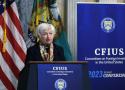
Chinese hackers breached the US government office that reviews foreign investments for national security risks, three US officials familiar with the matter told CNN.
The theft, which has not previously been reported, underscores Beijing’s keen interest in spying on a US government office that has broad powers to block Chinese investment in the US as tensions between the world’s two superpowers remain high.
The breach was part of a broader incursion by the hackers into the Treasury Department’s unclassified system. The office targeted by the hackers, the Committee on Foreign Investment in the US (CFIUS), in December gained greater authority to scrutinize real estate sales near US military bases. US lawmakers and national security officials have grown increasingly worried that the Chinese government or its proxies could use land acquisitions to spy on those bases.
More U.S. companies have been added to the list of telecommunications firms hacked in a wave of breaches by a Chinese state-backed threat group tracked as Salt Typhoon.
Massive ‘Typhoon’ cyberattacks on U.S. infrastructure and telecoms sought to lay groundwork for potential conflict with Beijing, as intruders gathered data and got in position to impede response and sow chaos


