
From:
Foreign, Commonwealth & Development Office gov.uk
Published
9 December 2025
Two tech companies based in China have been sanctioned for reckless and indiscriminate cyberattacks
Sichuan Anxun Information Technology Co. Ltd (known as i-Soon) for targeting over 80 government and private industry IT systems across the world, and for supporting others planning to carry out malicious cyber activity.
Integrity Technology Group Incorporated (known as Integrity Tech) for controlling and managing a covert cyber network and providing technical assistance for others to carry out cyberattacks. Targets have included UK public sector IT systems.
I-Soon and Integrity Tech are examples of the threat posed by the cyber industry in China, which includes information security companies, data brokers (that collect and sell personal data), and ‘hackers for hire’. Some of these companies provide cyber services to the Chinese intelligence services.
The UK’s National Cyber Security Centre (NCSC) assesses that it is almost certain that this ‘ecosystem’ or complex network of private sector actors, supports Chinese state-linked cyber operations.
The announcement follows the August 2025 exposure by the UK and international partners of three China-based companies linked to the cyber-espionage campaign known as SALT TYPHOON. Combined, they highlight the vast scale of cyberattacks by China-based companies targeting governments, telecommunications, military institutions, and public services worldwide.
These cyberattacks from unrestrained actors in China go against agreed UN cyber principles. The measures announced today are designed to reduce the risk of such threats to the UK’s security and broader international stability.
As the Prime Minister set out recently in a speech at the Guildhall, protecting our security is non-negotiable and the first duty of the government. The UK recognises that China poses a series of threats to UK national security. China is also a fellow permanent member of the UN Security Council, the world’s second largest economy and a nuclear power which has delivered almost a third of global economic growth over the past decade. We challenge threats robustly, enabling us to pursue cooperation where it is in our interest.
Notes to Editors
In August 2025, the UK alongside 12 other countries co-sealed a cyber security advisory linking China-based technology companies to some of the activities associated with a China state-affiliated APT group (commonly known as SALT TYPHOON). These companies are: Sichuan Juxinhe Network Technology Co. Ltd, Beijing Huanyu Tianqiong Information Technology Co., and Sichuan Zhixin Ruije Network Technology Co. Ltd.
This activity targeted governments, telecommunications, transportation, and military infrastructure globally, and sought to provide Chinese intelligence services with the capability to identify and track targets’ communications and movements worldwide.
Together with France, the UK continues to lead the Pall Mall Process, an international initiative which seeks to establish a framework for responsible behaviour for those involved in the rapidly growing market in commercial cyber intrusion capabilities.
The UK has consistently promoted the UN normative framework for responsible state behaviour in cyberspace. The UK remains the first and only country to publish guidelines for its National Cyber Force detailing the principles that we adhere to. We firmly believe that states should use cyber capabilities in a responsible manner, whether commercial or otherwise.
krebsonsecurity.com Krebs on Security September 11, 2025
In May 2025, the European Union levied financial sanctions on the owners of Stark Industries Solutions Ltd., a bulletproof hosting provider that materialized two weeks before Russia invaded Ukraine and quickly became a top source of Kremlin-linked cyberattacks and disinformation campaigns.…
Materializing just two weeks before Russia invaded Ukraine in 2022, Stark Industries Solutions became a frequent source of massive DDoS attacks, Russian-language proxy and VPN services, malware tied to Russia-backed hacking groups, and fake news. ISPs like Stark are called “bulletproof” providers when they cultivate a reputation for ignoring any abuse complaints or police inquiries about activity on their networks.
In May 2025, the European Union sanctioned one of Stark’s two main conduits to the larger Internet — Moldova-based PQ Hosting — as well as the company’s Moldovan owners Yuri and Ivan Neculiti. The EU Commission said the Neculiti brothers and PQ Hosting were linked to Russia’s hybrid warfare efforts.
But a new report from Recorded Future finds that just prior to the sanctions being announced, Stark rebranded to the[.]hosting, under control of the Dutch entity WorkTitans BV (AS209847) on June 24, 2025. The Neculiti brothers reportedly got a heads up roughly 12 days before the sanctions were announced, when Moldovan and EU media reported on the forthcoming inclusion of the Neculiti brothers in the sanctions package.
In response, the Neculiti brothers moved much of Stark’s considerable address space and other resources over to a new company in Moldova called PQ Hosting Plus S.R.L., an entity reportedly connected to the Neculiti brothers thanks to the re-use of a phone number from the original PQ Hosting.
“Although the majority of associated infrastructure remains attributable to Stark Industries, these changes likely reflect an attempt to obfuscate ownership and sustain hosting services under new legal and network entities,” Recorded Future observed.
Neither the Recorded Future report nor the May 2025 sanctions from the EU mentioned a second critical pillar of Stark’s network that KrebsOnSecurity identified in a May 2024 profile on the notorious bulletproof hoster: The Netherlands-based hosting provider MIRhosting.
MIRhosting is operated by 38-year old Andrey Nesterenko, whose personal website says he is an accomplished concert pianist who began performing publicly at a young age. DomainTools says mirhosting[.]com is registered to Mr. Nesterenko and to Innovation IT Solutions Corp, which lists addresses in London and in Nesterenko’s stated hometown of Nizhny Novgorod, Russia.
According to the book Inside Cyber Warfare by Jeffrey Carr, Innovation IT Solutions Corp. was responsible for hosting StopGeorgia[.]ru, a hacktivist website for organizing cyberattacks against Georgia that appeared at the same time Russian forces invaded the former Soviet nation in 2008. That conflict was thought to be the first war ever fought in which a notable cyberattack and an actual military engagement happened simultaneously.
Mr. Nesterenko did not respond to requests for comment. In May 2024, Mr. Nesterenko said he couldn’t verify whether StopGeorgia was ever a customer because they didn’t keep records going back that far. But he maintained that Stark Industries Solutions Inc. was merely one client of many, and claimed MIRhosting had not received any actionable complaints about abuse on Stark.
However, it appears that MIRhosting is once again the new home of Stark Industries, and that MIRhosting employees are managing both the[.]hosting and WorkTitans — the primary beneficiaries of Stark’s assets.
A copy of the incorporation documents for WorkTitans BV obtained from the Dutch Chamber of Commerce shows WorkTitans also does business under the names Misfits Media and and WT Hosting (considering Stark’s historical connection to Russian disinformation websites, “Misfits Media” is a bit on the nose).
The incorporation document says the company was formed in 2019 by a y.zinad@worktitans.nl. That email address corresponds to a LinkedIn account for a Youssef Zinad, who says their personal websites are worktitans[.]nl and custom-solution[.]nl. The profile also links to a website (etripleasims dot nl) that LinkedIn currently blocks as malicious. All of these websites are or were hosted at MIRhosting.
Although Mr. Zinad’s LinkedIn profile does not mention any employment at MIRhosting, virtually all of his LinkedIn posts over the past year have been reposts of advertisements for MIRhosting’s services.

July 1, 2025
WASHINGTON Today, the U.S. Department of the Treasury’s Office of Foreign Assets Control (OFAC) is designating Aeza Group, a bulletproof hosting (BPH) services provider, for its role in supporting cybercriminal activity targeting victims in the United States and around the world. BPH service providers sell access to specialized servers and other computer infrastructure designed to help cybercriminals like ransomware actors, personal information stealers, and drug vendors evade detection and resist law enforcement attempts to disrupt their malicious activities. OFAC is also designating two affiliated companies and four individuals who are Aeza Group leaders. Finally, in coordination with the United Kingdom’s (UK) National Crime Agency (NCA), OFAC is designating an Aeza Group front company in the UK.
“Cybercriminals continue to rely heavily on BPH service providers like Aeza Group to facilitate disruptive ransomware attacks, steal U.S. technology, and sell black-market drugs,” said Acting Under Secretary of the Treasury for Terrorism and Financial Intelligence Bradley T. Smith. “Treasury, in close coordination with the UK and our other international partners, remains resolved to expose the critical nodes, infrastructure, and individuals that underpin this criminal ecosystem.”
Today’s action is being taken pursuant to Executive Order (E.O.) 13694, as further amended, and builds on OFAC’s February action targeting ZServers BPH. Today’s action also reflects Treasury’s continued work to combat cybercrime and degrade the support networks that enable malicious actors to target U.S. citizens, technology, and critical industries.
AEZA GROUP: KEY TECHNICAL SUPPORT FOR RANSOMWARE GROUPS, CYBERCRIME, AND ILLICIT DRUGS
Aeza Group, headquartered in St. Petersburg, Russia, has provided BPH services to ransomware and malware groups such as the Meduza and Lumma infostealer operators, who have used the hosting service to target the U.S. defense industrial base and technology companies, among other victims globally. Infostealers are often used to harvest personal identifying information, passwords, and other sensitive credentials from compromised victims. These credentials are then often sold on darknet markets for profit, making infostealer operators a key piece of the cybercrime ecosystem.
Aeza Group has also hosted BianLian ransomware, RedLine infostealer panels, and BlackSprut, a Russian darknet marketplace for illicit drugs. Darknet drug marketplaces allow for the anonymous purchase and shipment of narcotics over the internet, making them a present and increasing contributor to drug trafficking to the United States and worldwide. According to Treasury’s Financial Crimes Enforcement Network (FinCEN) and its supplemental advisory on fentanyl, criminal organizations use darknet marketplaces to sell precursor chemicals and manufacturing equipment used for the synthesis of fentanyl and other synthetic opioids, as well as to traffic fentanyl and other narcotics into the United States.
OFAC is designating Aeza Group pursuant to E.O. 13694, as further amended by E.O. 14144 and E.O. 14306, for being responsible or complicit in, or having engaged in, directly or indirectly, cyber-enabled activities originating from, or directed by persons located, in whole or in part, outside the United States that are reasonably likely to result in, or have materially contributed to, a threat to the national security, foreign policy, or economic health or financial stability of the United States, and that have the purpose of or involve causing a misappropriation of funds or economic resources, intellectual property, proprietary or business confidential information, personal identifiers, or financial information for commercial or competitive advantage or private financial gain.
Aeza International Ltd. is the United Kingdom branch of Aeza Group. Aeza Group uses Aeza International to lease IP addresses to cybercriminals, including Meduza infostealer operators.
Aeza Logistic LLC and Cloud Solutions LLC are Russia-based subsidiaries that are 100% owned by Aeza Group. Servers BPH.

In a sanctions package including more than 150 new measures, the British government said it was closing loopholes being exploited by the Kremlin.
A key Russian cybercrime syndicate responsible for aiding merciless ransomware attacks around the world has been targeted by new UK sanctions.
The Council imposed restrictive measures on three individuals involved in cyber-attacks against Estonia.
Russian companies have begun using bitcoin and other digital currencies in international payments following legislative changes that allowed such use in order to counter Western sanctions, Finance Minister Anton Siluanov said on Wednesday.
Sanctions have complicated Russia's trade with its major partners such as China or Turkey, as local banks are extremely cautious with Russia-related transactions to avoid scrutiny from Western regulators.
The United States exposes the identity of and imposes sanctions on two members of the Russian government-aligned hacktivist group.WASHINGTON — Today, the United States designated Yuliya Vladimirovna Pankratova (Pankratova) and Denis Olegovich Degtyarenko (Degtyarenko), two members of the Russian hacktivist group Cyber Army of Russia Reborn (CARR) for their roles in cyber operations against U.S. critical infrastructure
The U.S. Department of the Treasury's Office of Foreign Assets Control (OFAC) sanctioned three cryptocurrency exchanges for offering services used to evade economic restrictions imposed on Russia following its invasion of Ukraine in early 2022.
This includes Bitpapa IC FZC LLC, Crypto Explorer DMCC (AWEX), and Obshchestvo S Ogranichennoy Otvetstvennostyu Tsentr Obrabotki Elektronnykh Platezhey (TOEP).
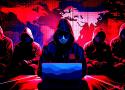
The U.S. Treasury Department has sanctioned a Wuhan-based company used by the Chinese Ministry of State Security (MSS) as cover in attacks against U.S. critical infrastructure organizations.
#APT31 #China #Computer #Critical #InfoSec #Infrastructure #Sanctions #Security #USA

The U.S. government announced Tuesday sanctions against the founder of the notorious spyware company Intellexa and one of his business partners. This is

As the damage caused by ransomware and profits flowing to attackers reaches record levels, a panel of cybersecurity and policy experts reviewed what it might take
G7 is drafting a workaround to use frozen assets to rebuild Ukraine.
The United Kingdom and United States on Thursday sanctioned seven people connected to what officials have told The Record is a single network behind the Conti and Ryuk ransomware gangs as well as the Trickbot banking trojan.
The sanctions are described as the first major move of a “new campaign of concerted action” between Britain and the United States, and insiders say that further actions should be expected later this year.
Si les sanctions économiques contre la Russie ont un impact significatif, il en est autrement de celles imposées dans le domaine cyber.


