
The United States exposes the identity of and imposes sanctions on two members of the Russian government-aligned hacktivist group.WASHINGTON — Today, the United States designated Yuliya Vladimirovna Pankratova (Pankratova) and Denis Olegovich Degtyarenko (Degtyarenko), two members of the Russian hacktivist group Cyber Army of Russia Reborn (CARR) for their roles in cyber operations against U.S. critical infrastructure
On July 15, 2024, Akamai prevented one of the largest distributed denial-of-service (DDoS) cyberattacks it has ever observed against a major financial services company in Israel.
The highly sophisticated, high-volume attack lasted almost 24 hours.
The attacker deployed larger-than-usual resources, indicating a serious risk for future attacks.
Other Israeli financial institutions reportedly suffered outages and downtimes on the same day, potentially due to the same type of attack and the same aggressor.

I discovered an unauthenticated path traversal against the latest version of progress whatsup gold and turned it into a pre-auth RCE, following is how I did it, this is the story of CVE-2024-4885
Jenkins – an open source automation server which enables developers around the world to reliably build, test, and deploy their software
Researcher showcases hack against Microsoft Windows Update architecture, turning fixed vulnerabilities into zero-days.

Today we've published an open letter to online service providers operating in the UK about the increased risk of their platforms being used to stir up hatred, provoke violence and commit other offences under UK law, in the context of recent acts of violence in the UK.
A global stop-payment mechanism created by INTERPOL successfully recovered over $40 million stolen in a BEC attack on a company in Singapore.

SonicWall discovered the Apache OFBiz flaw, identifying it as a critical issue enabling unauthenticated remote code execution

Delta CEO Ed Bastian said the company plans to seek compensation from Microsoft and CrowdStrike.
Mobile Guardian experienced a security incident that involved unauthorized access to the iOS and ChromeOS devices enrolled to the Mobile Guardian platform on the 4th of August.
We have halted servers in order to prevent further disruption by the perpetrator.
This is not related to an error in configuration that occurred on the 30th of July which affected Mobile Guardian iPads on our Singapore instance only.

Threat actors breached the UK-based mobile device management (MDM) firm Mobile Guardian and remotely wiped thousands of devices.
In this post we will explore some of the anti-phishing measures employed by Microsoft 365 (formally Office 365) as well as their weaknesses. Certitude was able to identify an issue in that allows malicious actors to bypass anti-phishing measures.

Les attaquants ont chiffré une partie des données financières et menacent de les diffuser s’ils ne reçoivent pas une rançon. Une enquête a été ouverte.

Cyble observes how Dark Web forums reveal ServiceNow users falling victim to a Remote Code Execution vulnerability, which exposes sensitive data & escalates risks across sectors.

The Hunters International ransomware group is targeting IT workers with a new C# remote access trojan (RAT) called SharpRhino to breach corporate networks.
During a recent ransomware incident investigated by the Quorum Cyber Incident Response team, novel malware was identified previously unknown.

Android security updates this month patch 46 vulnerabilities, including a high-severity remote code execution (RCE) exploited in targeted attacks.
One day at the dawn of the 1980s, an FBI agent in his 30s named Rick Smith walked into the Balboa Café, an ornate, historic watering hole in San Francisco’s leafy Cow Hollow neighborhood. Smith, who was single at the time, lived nearby and regularly frequented the spot.
As he approached the oak wood bar to order a drink he suddenly spotted a familiar face — someone Smith had met about a year before, after the man had walked into the Soviet Consulate in San Francisco. He was Austrian by birth, but a denizen of Silicon Valley, an entrepreneur who operated as a middleman between American tech companies and European countries hungry for the latest hi-tech goods.
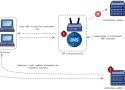
Chinese hacking group Evasive Panda compromises ISP to push malware, targeting companies through DNS poisoning and insecure update mechanisms.

A massive Magniber ransomware campaign is underway, encrypting home users' devices worldwide and demanding thousand-dollar ransoms to receive a decryptor.
Magniber launched in 2017 as a successor to the Cerber ransomware operation when it was spotted being distributed by the Magnitude exploit kit.
Since then, the ransomware operation has seen bursts of activity over the years, with the threat actors utilizing various methods to distribute Magniber and encrypt devices. These tactics include using Windows zero-days, fake Windows and browser updates, and trojanized software cracks and key generators.


